Showing posts with label health. Show all posts

Monday, March 26, 2012

Thankfulness Project Monday

"If you concentrate on finding whatever is good in every situation, you will discover that your life will suddenly be filled with gratitude, a feeling that nurtures the soul."
-Rabbi Harold Kushner

Awesome quote, isn't it? We so often focus on the negative in every situation that we can easily miss the good in the situations. I try to be intentional about trying to acknowledge the good, but sometimes it can be tough! That being said, here are a few of the good things I've noticed in different situations recently. I'm feeling thankful for:

  • Good Quotes: I just finished quote week here on the blog, and I think I fell in love with quotes just a little bit more. They're Just. So. Good. 
  • Thought provoking books: I love a good book, and enjoy reading "for fun" books. However, books that make me think, provide information, or give me new ideas for my job are always winners in my book. I'm thankful for books!
  • Clementines: I've been enjoying clementines for the last few months, but I don't think I've ever put it on a thankful list. This is unfortunate because I really love them and get excited when winter hits and they are back in season. Yummmmmm.
  • Fresh Air: I live in an area where I don't breathe in constant pollution and smog, and it's never really something I stop to think about when I walk outside. However, I'm very thankful that I can walk outside and breathe in relatively clean air. 
  • My Little Lifesaver: Allergens have been much worse this winter then in previous winters (probably because we haven't gotten much in the way of a good freeze), and I've been battling with a lot of sinus migraines because of this. My little lifesaver has helped decrease the strength of my headaches, and has allowed me to keep functioning throughout the day. I love this thing! 
And those are a few of the things that I'm feeling thankful for right now. 

Now it's your turn!
What are you feeling thankful for today? How do you handle allergies (if you have them!)? What's one of your favorite books? 

Thursday, March 15, 2012

How To Survive A Break Up {Part 3}

"No one told me that grief felt so like fear...at other times it feels like being mildly drunk, or concussed. There is a sort of invisible blanket between the world and me. I find it hard to take in what anyone says. "
-C.S. Lewis, A Grief Observed, p. 3

Welcome back to another edition of how to survive a breakup in a healthy way that will allow you to become a healthier individual in the future.

Here are a few more tips to survive the breakup in a healthy manner:

  • Focus on getting through today, not the next week or month. 12 step programs focus on staying sober "just for today", because thinking about going without their "drug of choice" forever is overwhelming. We can do anything for today. Instead of being miserable that you'll be without this person for forever, can you focus on surviving and grieving in a healthy way "just for today"?
  • Continue to engage in healthy behaviors as much as you can. It can be incredibly difficult to maintain a healthy lifestyle while you're grieving, but it will help you stay healthy and grieve in an effective way if you can manage. Maintaining a consistent daily schedule is important. Continue to eat balanced meals, exercise as best you can, sleep 7-8 hours a day, etc... 
  • Find fun activities to distract yourself, or pick up a new hobby. Sign up for a cooking or sewing class, or perhaps sign up for a few sessions of personal training in order to better learn a new type of exercise. Go out for a fun girls or guys weekend away or have a "staycation" at a friend's house.
  • Make sure to not create negative messages about yourself. It can be pretty easy to internalize messages like "I'm not good enough", "I'm unloveable", or "I don't have any attractive qualities". Believing these messages will keep you depressed and won't allow you to grieve in healthy ways. Focus on the positive attributes and skills you have, and combat your negative thoughts when they come up. 

Now it's your turn!
What are some of the fun activities you use to distract yourself when you're stressed or going through a tough time? 

Thursday, March 1, 2012

How To Help A Friend Through A Breakup... {Part 2}

A few days ago, I did my first post in the series of "how to help a friend through a breakup". In it, I discussed four things that you can do when someone you love is struggling through a breakup and grieving the loss of that relationship. Today, I will continue with a few other things that you can do to help:
  •   Be an encouragement. Going through a breakup, it’s easy for individuals to take on many negative messages about themselves. Encourage the individual with the qualities that you enjoy or appreciate in them. While they may be receiving negative messages from their ex or themselves, they need to hear positive messages around them. (examples of negative messages might include some of the following: "I'm worthless", "I'm unloveable", or "there's something fundamentally flawed with me).
  • Encourage your loved one to engage in healthy coping skills. Negative coping skills, while they work in the moment, tend to create more anxiety or depression in the long run, and they don’t actually help heal their heart. Try to encourage your friend or family member to try out some of these healthy coping skills.
  • Help distract the individual in healthy ways. Things that may be helpful include: taking a walk, going hiking, going fishing, going to a movie, watching a sport game, take a cooking class, or some other activity that the individual usually enjoys.
  • Encourage healthy behaviors. Eat regular & balanced meals, exercise regularly, sleep well, find ways to reduce stress, etc… Staying healthy will help the individual to heal faster than if they become unhealthy instead. 
Remember that you can't FORCE your friend to engage in healthy behaviors or coping skills, but you can model healthy behaviors and coping, and you can encourage them to try some of them out. Be careful how hard you push, however, because many people are stubborn and will push back. 

Now it's your turn!
What are some healthy ways that you like to distract yourself? When you're upset or hurting, what's the first health behavior you let go of? How do you encourage those around you who are hurting? 

Saturday, January 21, 2012

Sweet Potato Cauliflower Soup

As I was scanning through pinterest a few weeks ago, I stumbled on a recipe for Sweet Potato Cauliflower Soup on Manifest Vegan. I'm not a huge fan of sweet potatoes or cauliflower, but the soup looked good, so I decided to give it try. I did make a few slight modifications on the Ingredients list, but you'll need to head over to Manifest Vegan to see the actual recipe!

Ingredients
1 head of cauliflower
3 sweet potatoes
1 sweet onion
1 can of Chickpeas (I added this for some extra protein)
Garlic powder
6.5 cups Water
Lots of pepper

The Cooking Process:


You'll definitely want to check out her original post, because her pictures are so much better then my own! For not really liking sweet potato or cauliflower soup, I actually really liked this one! It's warm and filling for a cold, winter day! I made a big batch and was able to freeze half of it for later! This soup was very easy and quick to make, which I enjoy! My only complaint was that it used a few dishes to cook, but really, that is such a small thing that this recipe is still WELL worth your time!

Now it's your turn!
Do you make a lot of soups in the winter? What are some of your favorite ways to add protein to your favorite dishes? 

Thursday, January 19, 2012

Playing the Victim Role To Stress

"When we have been prevented from learning how to say no, our bodies end up saying it for us." 
- Dr. Mate

When we put our body into constant stress mode for extended periods of time, we will end up paying a price. Whether it is physically, emotionally, mentally, spiritually, or relationally, it will affect us in some way or another. I think sometimes we get caught in the trap of thinking that we are invincible to stress, and that somehow we can avoid paying the price.

If that's how you think, and it certainly is tempting to think that way because it allows us to not have to change, let me break this to you: YOU WILL end up paying the price, and probably have already in some way.

Today I want to focus on not playing the victim role! I think there's often the temptation to be the victim to stress. After all, events happen to us that we can't control, and we must simply react to what we've been given. This causes stress, doesn't it? Absolutely! However, when we play the victim role to most anything in life, we tend to take the passive approach, and use that thing as an excuse to not do x, y, or z in our life. That thing might make things much more difficult for us, but if we take the passive role, we end up handing our life over to that thing.

And so it is with stress. Many of us have built our own prisons when it comes to stress, and kept ourselves in a passive victim role. We stay locked up in the prisons that we have built by our own choice. We don't always get to choose what happens to us, but we do get to choose how we respond. That means that we can choose if we want to be a victim to stress, or if we want to stand up and try to fight against it. 

It WILL be uncomfortable at times. It will mean living differently then we have in the past. It will mean engaging in healthy stress management. 

Here's my question to you: Are you willing to stand up and play an active role in fighting against stress in your life? Are you willing to say no, set limits appropriately, and take care of yourself? Are you willing to take control of your behaviors? 

I invite you to join me in the journey of fighting against stress, and set up the structure of your life to limit the amount of stress that you experience!

Now it's your turn:
Why is it easy to play the victim role to stress, blaming it for things that happen in life instead of standing up and being responsible for our own behaviors? 

Tuesday, January 17, 2012

Our Body's Reaction To Stress

The last few weeks in my Wellness Wednesday posts I've been discussing the subtask of stress management. In case you've missed it, here are the posts in this mini-series:

Wellness Wednesday: {Stress Management Part 1- Healthy Coping}
Wellness Wednesday: {Stress Management Part 2-Eustress}

I thought it might be helpful to explain what actually happens when we get stressed. When we start to feel stressed, our body needs to increase its cardiovascular output in order to bring oxygen and energy to certain muscles. Our body puts out a large amount of stress hormones, which can lead to the following progression:
  • Increased heart rate
  • Increased blood pressure
  • Hypertension
  • Accumulation of plaque on the inner lining of blood vessels, which can lead to heart attacks or cardiac death
  • Neuropsychological changes in affect and behavior
Stress is no joke, but we tend to brush it off, refuse to take the time to deal with it, or even chase after it. During stressful times, our immune system can be negatively impacted because:
  • immune organs shrink
  • disease-fighting cells can be decreased in both number and function
Then there are the changes that we tend to easily recognize when we start feeling stressed:
  • Our appetite can change
    • Some lose their appetite and feel sick
    • Others eat turn to junk food because they crave the simple carbs
    • Either way we aren't giving our body what it needs to function & remain healthy
  • Irritability increases (which can deeply affect relationships)
  • Irrational thoughts become more frequent (leading to increase in anxiety & depressed feelings)
So let me say this again: Stress is no joke! I know it's easy to get into a cycle where we get busy and overwhelmed, and the last thing we think of doing is taking time out of our crazy schedule to cope with the stress in a healthy way. When we're in stress mode, the thought of taking energy to decrease the stress is far from our minds. However, we need to do that which goes against what we naturally want to do: we need to fight the stress and cope with it in healthy ways in order to keep ourselves well both physically and mentally.

Part of the problem is that we get so focused on stress that we sometimes ignore the physical cues that our body sends out, and we find ourselves drowning in stress without realizing it. Here's my challenge to you: Learn the physical cues your body sends out so you can deal with it at the beginning instead of finding yourself drowning in it.

Now it's your turn:
How does your body respond to stress? Does it ever seem like you're too busy to deal with stress? What might the results of this be? 

Saturday, January 14, 2012

Gingerbread Oatmeal

By now you should all know how much I love oatmeal, and I'm pretty sure my only creativity in life involves creating different variations of it! After making the gingerbread pancakes over Christmas, I knew I needed to make gingerbread oatmeal as well. It's still winter, so gingerbread oatmeal can still be consumed:)

Ingredients
Oatmeal
Milk/Water
Molasses
Brown Sugar
Cinnamon
Ginger
Nutmeg (optional)
Cloves

All the spices added to the bowl and molasses drizzled on top

All the spices mixed into the oatmeal

This oatmeal is REALLY delicious, and is a little more wintery then some of the other oatmeal that I've posted. Oh, have you checked all of them out? If not, here they are:
After a few breakfast recipe posts, I promise that next week I'll be back at you with a dinner recipe, just to mix it up a bit! 

Now it's your turn:
Are you a fan of gingerbread, or would you rather pass by it? What are you most creative about making in cooking? 


Thursday, January 12, 2012

Motivation for Change

If you don't know where you are going, you will probably end up somewhere else.  ~Lawrence J. Peter

Motivation is when your dreams put on work clothes.  ~Author Unknown

Over the past few weeks I've addressed a number of aspects of behavior change that people tend to skip over on their way to attempting to change something in their life. Here are the previous posts in this series:

Before you start to change behavior, it's good to know why you'd like to change your behavior. The fact of the matter is that behavior change can be a difficult, long, hard, tedious process. There needs to be something we hold on to that will continue to motivate us forward when we want to give up (and for most of us, that time will come at some point). As you think about your dreams and what you'd like to achieve through behavior change, I'm wondering if you know what is motivating yourself forward. This "what" and "why" will help keep you going when the voice inside tells you to give up, that it isn't worth the time, energy, or work involved. 

Once you figure out what that motivation will be, write it down somewhere and read it regularly. A bathroom mirror or refrigerator are both good places to put motivations, as we tend to look at those places many times a day. The more we repeat something, the more it becomes an automatic thought. Because thoughts lead to our feelings and our behaviors, we need to get our thoughts right before we move forward. 

Let's look at a few examples:
Goal: Get healthy by working out 3 days a week (2 days running, 1 day biking)
Motivation: I'm choosing to exercise and get healthy because I desire to __________. (fill in the blank could be anything like the following: be an active grandparent one day, live a long, healthy life, feel better and stronger about myself).

Goal:  Correct my distorted thoughts and change these to rational thinking patterns
Motivation: I'm choosing to do the hard work of learning to challenge and change my distorted thinking patters because I want to ______. (fill in the blank. i.e. decrease the depressed or anxious feelings I experience, be a good role model to my children, be happier each day). 

See what I mean? This step, combined with the steps listed above, will start to set you up in the best way possible for being successful at your behavior change. 

We each do what we do for a specific reason. It's helpful to find out what the reason is that we engage in our current behavior, and create a new motivation for our new behavior. 

Now it's your turn:
What are some of your "motivations" for the year?

Wednesday, January 11, 2012

Wellness Wednesday: {Stress Management Part 2- Eustress}

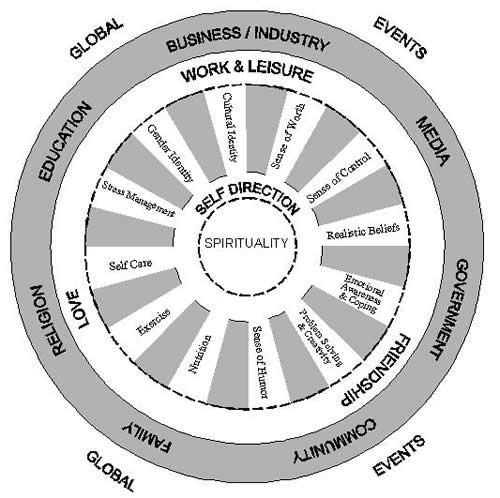
Welcome back to Wellness Wednesday! It might be good to take a moment to refresh your memory about the Wheel of Wellness, and my wellness page includes every past "Wellness Wednesday" post! Remember that wellness isn't the absence of the negative, but the presence of the positive in our lives.


Remember that I'm using the Wheel of Wellness to help visualize health in life:


Today I'm continuing my discussion on the subtask of Stress Management. You can see "part 1" of this subtask here.

I don't think we can have a real discussion on stress management without discussing what "stress" actually means. What IS stress, then? Basically, it's your body's physical and psychological response to anything that you perceive as overwhelming, alarming, or threatening. It's a biological process, with a wide-ranging set of events in the body.

Here's the thing: Not All Stress Is Bad! Sometimes I believe we are trained to think that any and all stress is a bad thing, and we start to panic when we feel stress coming on in our lives. But not all stress is bad, and, in fact, a small amount of stress is actually good for us! Even good stress (i.e. a new job, marriage, or a baby) can become unhealthy and taxing on the body if not properly dealt with.

How is stress good? Here are a few things that stress actually provides for us:

  • initiates invention & problem-solving capabilities and moves us towards creativity
  • It can give us that final push towards making changes or adapting to something
  • It can keep us healthy and happy
  • It pushes us out of our "love affair" with comfort (we can't live within this comfort zone all the time, because we won't change or grow. We become stagnant. Good stress actually helps us be "ok" with getting outside our comfort zone). 
Watch how you react the next time you start feeling a slight amount of stress. Do you panic and freak yourself out? Remember, what we think affects our feelings and our behaviors. The more you say "I'm stressed, I'm so stressed out, I'm overwhelmed", the more you feel overwhelmed and out of control". If you can acknowledge that you are feeling a slight amount of stress and you are choosing to engage with it in a healthy manner, it becomes manageable, and won't take over your life. Does that make sense? 

Here's your challenge: Watch how you talk to yourself when you start feeling stressed? Do you ramp your stress up, or do you acknowledge it for what it is without freaking out?

Now it's your turn:
Do you ramp up your stress level more then it needs to be? How can you use stress for your advantage without letting it overwhelm you?

Wednesday, January 4, 2012

Wellness Wednesday: {Stress Management Part 1- healthy coping}

Welcome to the first Wellness Wednesday post of 2012! It might be good to take a moment to refresh your memory about the Wheel of Wellness, and my wellness page includes every past "Wellness Wednesday" post! Remember that wellness isn't the absence of the negative, but the presence of the positive in our lives.

Remember that I'm using the Wheel of Wellness to help visualize health in life:


Today we will continue discussing Life Task 2 (Self-Direction), and begin discussing the subtask of "Stress Management".

Myers & Sweeney define "Stress Management" the following way:

General perceptions of one’s own self-regulation, seeing change as an opportunity for growth rather than as a threat to one’s security, ongoing self-monitoring and assessment of one’s coping resources, structuring-ability to organize and manage resources (e.g., time, energy, seeing limits, scheduling); need for structure, satisfaction with one’s stress management ability.


Whew! That's quite a mouthful, right? Obviously there's quite a bit involved in stress management, so I'm planning to break this into a few different posts.

Today I'm going to briefly discuss "one's coping resources". A few weeks ago I wrote a post on Healthy Coping Skills that may be helpful for you in determining your own ways of coping. The interesting thing about coping is that it is an activity that can be done before, during, and after the stressful event. Of course this coping will look a little different each time, but it is important to implement this at various stages of stress. Family and Friends play a huge part in healthy coping, as does engagement in faith/religion (social integration is a key in stress management!).

Here are a few questions to ask yourself about how you cope:

  • What things do I naturally go towards to help myself cope with stress (i.e. food, alcohol, TV, music)?
  • Who can I count on in life to help provide coping support when I am stressed and overwhelmed?
  • What aspects of faith and spirituality can help me cope with stressors in my life?
  • What things can I do to cope that are healthy and safe for me?
  • How can I increase my sense of control in this situation to decrease my stress?
  • What things would be helpful to include in my "coping toolbox" so that I'm prepared when stress comes my way?
If you can establish a "coping plan" beforehand, then you'll have something prepared when stress and negative life events happen. Having a plan already created will instantly decrease some of your stress, and will provide you with people, places, and things that will be healthy for you!

Next Wednesday be on the lookout for Part 2 of the "Stress Management" subtask!

Now it's your turn:
What sorts of people, places, and things might be helpful for you to put in your "coping toolbox" so you're prepared for the stressful moments in life? Are there negative ways you cope that you would like to decrease?

Tuesday, January 3, 2012

Establishing Mini-Steps to Attain Your Dreams

We all have big changes in our lives that are more or less a second chance.  ~Harrison Ford

I know that January is a natural time for people to make changes (If you don't feel ready to change something, please don't cave into the pressure though! It is better to make changes once you are prepared.), so I want to make sure to do a few posts to help you go into the behavior change with the greatest possibility of success!
Previous information about behavior change includes:
Today, let's talk about dreaming. Sometimes we fear our dreams, or feel that we have to edit them before we can say them aloud. Dreaming is good, and can lead to fantastic changes in our lives. However, I don't think it's enough to just stop at saying the dream. The dream is the end goal, but there's a lot of steps in life that get us to the end goal. It's important to set mini goals to get us to our dreams.

Here's an example:
Dream: Getting published
Mini-Goals
  • Create list of places to be published
  • Complete research on topic (could create mini-steps for this)
  • Network with people in _______ field
Dream: Increase My Self Esteem
Mini-goals:
  • Determine what is holding down my self-esteem
  • Create list of negative self-talk & negative beliefs about self
  • Engage in a practice of challenging & changing cognitive distortions
  • Implement a practice of daily affirmations
Of course you'd need to determine what mini-goals would work for you, and brainstorming is certainly an important step in this process. Dreaming is GOOD, and we shouldn't be afraid of it! Don't just stop at your dream, but establish a plan to get yourself to that dream. You CAN do it, but it may take some time and hard work, so be patient!

Now it's your turn:
What are your dreams for 2012? 

Sunday, January 1, 2012

2012! A Few Considerations Before Changing Behavior

HAPPY New Year! I truly can't believe that we are in 2012 already. I hope you all had a great and safe night ringing in the new year! I spent it with people I deeply care about, and had a blast celebrating. The nice thing about a new year is that it can be a new start to our life. Sure, the problems and situations we are in on December 31st don't go away magically when the ball drops, but the ball dropping can add some motivation or renewed determination to make changes.

The fact of the matter is that New Years Resolutions have become a joke for many people because they are easily dropped or abandoned. Behavior change can be tough, and successful, long term behavior change can be incredibly difficult to achieve. I'm big into setting things up right to create for yourself the biggest chance of successfully changing your behavior. Yes, it takes work, but it IS worth it.

A few things to consider:

  • While there is pressure out there to make your resolutions and start on January 1st, if you don't feel prepared yet, don't start making changes! It is OK to wait until a later date to start your behavior changes.
  • Making changes is significant at any date, not just January 1st!
  • Think big picture dreams, and outline smaller steps to get you to your bigger goal. This will allow you to feel like you're making progress by meeting your smaller goals, and the entire picture won't be so overwhelming. 
  • Track Your Behavior: Let me say it again- TRACK YOUR BEHAVIOR both before and during the behavior change. Check out the post I linked to under "track your behavior" to see some tips for doing this!
  • Find a support and accountability team. There's no reason we need to change behavior completely alone. 
I'll be doing a few more follow up posts on behavior change over the next weeks, so keep an eye out for it! I'm all for making goals for the new year, and think it's a great time to reevaluate your life. Please be smart about your behavior change and set yourself up for the highest chance of success possible!

Now it's your turn:
What are your dreams for 2012? What sorts of changes would you like to see in your life? Do you set resolutions or goals for yourself? 

Friday, December 30, 2011

Favorite Blog Posts From 2011

I know it's been a little quite here the last few days, but I've been enjoying time with my family and friends. I'll be back to regular posting next week! In the meantime, for my "Friday Favorites" post I thought I would do a summary of my favorite blog posts from 2011! Enjoy!

5 top posts from the year:


Some of my favorite posts from the year:

  • Challenging & Changing Cognitive Distortions - The post has a lot of good information about transforming your thinking patterns to allow for greater health and happiness in your life!
  • Thoughts of A Perfectionist - Not only does this post address thinking patterns of the perfectionist, but links to the other posts from the series on perfectionism that I did.
  • It's Not About Me!
  • The Series on Grieving and Loss- this link will take you to various posts by topic. This series is under "loss". I feel like this is good information to know, and can help us deal with suffering and loss in healthy and realistic ways!
  • Don't Use Words Too Big For The Subject - Ways to change our word choice to align with reality. 
  • The Series on OCD- I linked to the final post in this series, but it will take you to all the other posts as well! I hope that those who are struggling, or who have a loved one who is struggling, can find information like this and be able to recognize and understand it better!
  • "You Don't Understand" - We've all heard (or said) that phrase before, haven't we? This post discusses that simple little phrase, and how it changes conversation and relationships.
  • Healthy Coping Skills- It's good to use and practice good coping skills, isn't it? This post discusses categories of coping, and addresses ways to cope with things in a healthy manner.
It was honestly pretty hard to choose my favorite posts from the year. These aren't necessarily entertaining, but they contain information that is helpful or even crucial for living a healthy and happy life! 

Now it's your turn:
Link to your favorite blog post from the year in the comments section!

Tuesday, December 20, 2011

Track Behavior Before You Change It!

January 1st, the New Year, the start of finally "getting healthy"... yup, that's right. It's time for New Years Resolutions or Goals. First of all, it is OK to not create a new goal for yourself for the year, and it is also ok to not create one until say, February or March. Setting goals is a healthy thing, no matter what time of the year it is!

 However, New Years Resolutions have become notorious for being "a joke"; they are something we tend to make but not actually follow through on in our life. So, before we get any closer to New Years, and you all creating some new goals for your life, I thought I would begin to discuss how to set yourself up for the greatest amount of success in meeting your behavior change goals.

Part of the reason why New Years Resolutions tend to not be followed through on is because the entire "behavior change process" isn't done in a successful manner. Have you ever heard the phrase "you can't change what you don't know"? (If you haven't, well, I guess you just did) That phrase really describes the entire behavior change process. People tend to just jump into behavior change without knowing how that behavior currently plays out in their life.

Here are a few steps to do BEFORE changing your behavior that will set you up for the greatest chance at success:


  1. Decide What Behavior You'd Like To Change: Obviously you'll need to choose a behavior or two that you would like to change. Make sure to not set too many, as it is easy to feel overwhelmed about the entire thing and quit.
  2. Track Your Current Behavior to Learn How It Plays Out In Life: That's right, I said track the behavior. Figure out what excuses you're making, what makes you less likely/more likely to engage in said behavior you'd like to change, and figure out what times of the day/situations/people won't aid this change. We engage in behaviors for a specific reason, and there is some benefit we get out of maintaining our present behavior. Figure out what that reason is! We need to know what our excuses are and what things make it difficult to be successful at that behavior change. Here's an example- I found myself eating a lot of unhealthy snacks when I got home from work while unwinding and cooking dinner. By the time I sat down for dinner, I wasn't all that hungry for the healthy stuff, and I felt frustrated by my lack of health. Because I took time to track behavior, I figured out that if I cut up veggies on Sunday nights, I would have a super easy and convenient healthy snack for myself. Tracking behavior is a crucial component for healthy behavior change, and it's often a step that people tend to skip. 
  3. Read Up and Educate Yourself On Your Desired Behavior Goal: If you want to start exercising, then look at the various exercise classes at a local gym to see if any interest you. Read up on various exercises and recommendations online. If you want to start eating healthy, look into some various meal plans and/or some healthy new foods and recipes to add into your meals. Spend some time getting to know what your behavior looks like as a "healthy behavior."
  4. DO NOT CHANGE YOUR BEHAVIOR YET. I know, I know. It's frustrating. Please be patient and track your behavior for a week or two and really get to know it. You'll most likely be MUCH more successful in the long run, and come into the behavior change experience feeling less frustrated and more prepared. 

So, over the next few weeks as you are itching to change your behavior, why not take some time to be proactive about your goals and set yourself up for the greatest amount of success possible? It's certainly not going to harm you...right? So give it a shot!

Now it's your turn:
Do you set goals for yourself for the New Year? If so, have you started to think about what behaviors you'd like to change or add into your life? 

Friday, December 16, 2011

Friday Favorites

Favorite Tiny Delight of the Week
This week one of my favorite "little delights" has been watching Christmas movies with friends. I know I've mentioned Christmas movies a few times in recent posts, but since I've tried to watch a Christmas movie every day, I'd say it's a pretty big part of my weeks. After work and exercise, I get together with friends and watch a Christmas movie with Christmas tree lights on, drinking Christmas tea, and with scented candles. The entire thing is so incredibly relaxing and enjoyable, and a great way to slow down during a busy time of the year. 

Favorite Quote of the Week

The one resolution, which was in my mind long before it took the form of a resolution, 
is the key-note of my life.  It is this, always to
regard as mere impertinences of fate the handicaps which were placed
upon my life almost at the beginning.  I resolved that they should
not crush or dwarf my soul, but rather be made to  blossom, like
Aaron's rod,  with flowers.
-- Helen Keller

Helen Keller has always been an inspiration to me in regards to joy and utter perseverance despite some incredibly difficult circumstances. This is an amazing perspective to have. 


Favorite Post By Someone Else
Get Healthy, Starting NOW! Heater @ Running With Sass, along with the other FitFluential Ambassadors, posted some of her great tips for getting healthy NOW. There's no reason to wait until after the Holiday season is over to make steps towards health. Check out her post for a few little things you can do throughout this season! 

Favorite Past Post
Learning to Fail Better - One common theme I see in my clients and friends is this idea of letting failure (or a perception of failure) define you. 

Favorite Search Term
Now it's your turn!
What have been some of your own "favorites" for the week? Do you have a favorite Christmas movie?

Thursday, December 15, 2011

Healthy Coping Skills

"Coping refers to the thoughts and actions we use to deal with stress. In large part, feeling stressed or not depends on whether we believe we have the coping resources to deal with the challenges facing us. Most coping strategies fall into one of two broad categories:
  • Problem-focused coping strategies are used to tackle the problem directly. 
  • Emotion-focused coping strategies are used to handle feelings of distress, rather than the actual problem. 
In general, research has shown that problem-focused coping strategies are the most effective way for dealing with stress" (the above information is from this website). 

In this post I mentioned that it is beneficial to understand what our unhealthy coping mechanisms are in life (food, alcohol/substances, etc...), and learn to replace those with healthy coping mechanisms or skills. in coping we want to deal with the physical problems that are occurring, and we also want to address the emotions that go along with that situation. Given that this time of the year can be incredibly stressful (and because someone requested it!), here are a few healthy coping skills to practice and implement in your life. 

  • Attempt to increase your sense of control: In this post I discussed ways to increase or develop your sense of control in life. Implementing organizational strategies and setting small goals for yourself will help to increase your sense of control as well. (Food is NOT a healthy way to try to gain control, and can lead to an eating disorder)
  • Positive Reappraisal: This is simply what is sounds like it is. This process involves trying to view the positive within the situation in which you find yourself. This is about identifying the positive things that are happening instead of repeating the soundtrack of negative things that we find ourselves replaying. 
  • Addressing Cognitive Distortions: Challenge & Change the Irrational Beliefs that you might be holding on to. Any of the posts listed here under "Cognitive Distortions" will be helpful in addressing this. 
  • Writing: What goes on in our heads can sometimes be a jumbled mess, like someone took a handful of bouncy balls and let them go in our heads. If we can get all the stuff in our heads out onto paper (even the computer screen is better then nothing), we can sometimes develop a different perspective on the situation, or feel as if it is not so chaotic. This allows us to process the situation in a different way then simply by stressing out about it in our heads. Spend 10-15 minutes writing about the situation (or doing a free-write/stream of consciousness) and see what happens. 
  • Engage in Deep Breathing: Check out this post for steps to develop a practice of deep breathing. This will help to bring your heart rate and blood pressure down, and help you focus on the situation at hand. 
  • Exercise: But keep it balanced and moderate. Too much exercise can become unhealthy, just as no exercise is unhealthy. Engage in yoga, pilates, running, swimming, spinning, or some other form of exercise that will help combat some of the emotions you are experiencing. 
  • Engage in a hobby or activity you enjoy: Take a few minutes to take a long bath, watch a funny TV show, talk to a friend on the phone, write a letter to someone, play with pets, or volunteer. Here are a few other tips to refill yourself
  • Engage in or practice spiritual or religious activities: Spiritual communities can be a source of a great amount of support and encouragement. Some people find reading scriptures, prayer, or other similar activities to be encouraging. 
Ok, this is getting a bit long, so I will end my list of coping strategies at this point. The most important are to figure out ways that are helpful for you in various situations, and then practice these regularly. 

Now it's your turn:
What is one healthy coping skill you can commit to trying out and practicing in your life? 

Wednesday, December 14, 2011

Wellness Wednesday: {Self Care Part 2}

Welcome back to "Wellness Wednesday", a midweek look at one aspect of our health and wellness in life. Remember that I'm using the Wheel of Wellness to help visualize health in life:


If you need a little refresher, click here. We are currently in the middle of Life Task 2: Self Direction, and today we will be continuing our discussion on Self Care. This is an excellent time of the year to be focusing on self care, as any time holidays or family gatherings hit, it's easy to give up our self care activities. 


Myers & Sweeney (in their book Counseling For Wellness) have outlined 3 aspects of self care within this dimension of health:
"safety habits that we learn to protect ourselves from injury or death; periodic physical, medical, and dental checkups; and avoiding harmful substances, both those that we might ingest and toxic substances in the environment" (p. 24). 
The goal of self-care, then is to increase longevity of life, and to be as healthy as possible while living that life. 


Here are a few behaviors that fall under the category of "self-care"

  • Brushing & flossing teeth on a daily basis
  • Avoiding prolonged exposure to the sun, using sunscreen, and avoiding tanning beds (PLEASE!)
  • Wearing a helmet while riding a bike... always... 
  • Learning how to tread water and swim (in order to stay safe near the water)
  • Wearing a life jacket while out on a boat
  • Not diving in lakes/ponds/shallow pools
  • ALWAYS wearing a seat belt in the car
  • Getting appropriate vaccinations
  • Checking the back seat of the car before getting into it
  • Looking both ways before crossing the street
  • Not texting while driving (please don't text... seriously.... it's really dangerous)
  • Having a designated driver if you go out and drink
  • Avoid smoking
  • Eat a healthy and balanced diet 
  • Limit the number of alcoholic beverages you drink on a regular basis
  • Lock your house while you're home & when you're gone, EVEN IF you live in a safe neighborhood. 
These are just a few things to help get you thinking about the self care measures that you currently take in life, and which areas might need improvement. Modeling and teaching appropriate self care and safety to our children is important, as children tend to do what they see their parents do. 

Now it's your turn:
What important aspects of self-care do you regularly do? Which aspects of self-care might you need to improve? Do you regularly schedule appropriate health screenings and check-ups? 

Tuesday, December 13, 2011

Tips For Reducing Stress During the Holidays {Part 3}

Are any of you starting to feel the pressure and stress of the Holiday Season yet? Christmas can certainly bring out high levels of stress for people, so my goal is to give some easy and practical ways of reducing stress this season. If you've missed the other posts in this series, here are Part 1 and Part 2.

Here are a few other tips for reducing stress:

  • Be practical in the amount of people you buy for: While we may want to get gifts for all those in our lives, sometimes it isn't practical financially or time-wise. Set a limit on the amount of people you are buying for in your life. Your friends will probably more then understanding, or at least relieved it's one less gift they have to buy as well. If you've usually given a gift to someone, and have chosen not to this year, be assertive and tell them that upfront. If you're tight on money, let them know that, while you'd like to buy something for them, you just can't do it this year, but still want them to know that you appreciate your friendship. 
  • Be aware of what your unhealthy coping mechanisms are: Most of us have some unhealthy ways to cope with situations: food, alcohol, picking, etc... Plan in advance what you will do when you are tempted to use these unhealthy coping mechanisms. I find that it can be helpful to create a list in advance of healthy things you can do when you are in a place that you need to cope so it is ready at your fingertips when it is needed. 
  • Be careful to not have unrealistic expectations for family: Sometimes we expect that a family member's behavior will change simply because it's Christmas. Generally speaking, people are who they are no matter what time of the year it is, meaning that just because it's a big holiday doesn't mean the person's behavior will change. 
  • Practice deep breathing regularly: When we start getting stressed, it's easy for us to feel short of breath, our heart races, and our tension shoots up. Practicing deep breathing throughout the day will help keep your stress at bay, allowing you to function as best as possible. Click here to read about developing a deep breathing practice. 
  • Understand that you don't HAVE to get together with family: Sometimes we feel that the holidays obligate us to spend time with family. While it's nice if you can, you are in no way obligated to do this. Perhaps your family is toxic or too inappropriate/dysfunctional/unsafe to be around. You'll have a more enjoyable break if you spend it as an immediately family instead of throwing yourselves into a toxic family situation. 
Well, you now have 15 tips to decrease your overall stress this holiday season. Choose a few to work on and make a priority throughout the next few weeks, and let me know how it goes.

Now it's your turn:
What sorts of stress have you experienced this Christmas season so far? What are 2 tips that you can commit to working on throughout the next few weeks?

Monday, December 12, 2011

Thankfulness Project Monday

We often take for granted the very things that most deserve our gratitude.  ~Cynthia Ozick


Isn't the above quote so very often true? We can often remember to be grateful for the big things in life, such as a vacation, new car, or something we've long awaited for. However, sometimes we forget to be just as grateful for the little things in life. Besides, don't the little things often become the big things in life?


With this in mind, here are a few of the "little things" that I'm grateful for right now:
  • Christmas movies: OK, I know that I put this on my list last week too, but I'm using it again because I'm equally as thankful for them this week. I've watched a Christmas movie a night this week, and I've loved that! Some of them have been busts (A Princess for Christmas, anyone?), and some of them have been great (Miracle on 34th Street, Christmas Vacation, Elf, Love Actually, The Holiday, & Christmas in Connecticut, to name a few). It's such a relaxing way to end the day. 
  • My Space Heater & Blankets: These things keep me WARM and cozy in the winter. I don't like turning my heat on too high because I think it's a waste of money, so it usually hovers between 64 and 66 degrees, but sometimes lower. The space heater warms up the room I'm in, and is much cheaper. Of course blankets are a HUGE help as well! Cozy and cheap- that's the way I like it. 
  • Luna Bars: Easy and convenient, these guys are a great way to boost my energy towards the end of the work day, and before my evening work outs. They are delicious, unlike many protein bars I've tried, and are easy to throw into any bag I choose to take with me. 
  • Lotion for the winter: I use much thicker cream lotion for the winter, and I'm so glad they invented this stuff! My face and body gets SO dry and uncomfortable in the winter, and I would feel pretty miserable without this stuff. It's a little thing that is easy to pass up when thinking about "gratefuls" for the day, but I'm very glad that I have found something that makes the winter a little more comfortable.
  • Scarves: They're a fun accessory, but can also have a very practical use in the winter as well. I love adding a scarf to my outfit for the day:)
Now it's your turn:
What are you feeling thankful for right now? What's your favorite Christmas movie or favorite way to get in extra protein in the day?

Saturday, December 10, 2011

Candy Cane Oatmeal

Last weekend I wanted to make a Christmas sort of oatmeal. If you've been following this blog for long, you may know how much I love making all sorts of varieties of oatmeal, and especially love making them for the season! As I paced about my living room and kitchen trying to come up with what to do to my oatmeal, my eyes landed on a box of "Candy Cane Lane" tea. I immediately knew what I wanted to make: Candy Cane Oatmeal!

Ingredients
Water
Candy Cane Tea
Oats
Brown Sugar
Raisins
Cranberries
Almond Slices

I started out by bringing the water to a hard boil. I then pulled the pan off the stove and put 1 candy cane lane tea bag in the water. For a stronger tea flavor, put in more tea bags! I let the bag sit in the water for about 5 minutes, and then pulled the bag out of the water.


I then put in the appropriate amount of oats for the fluid I had, cooked, and added toppings. 

Voila! DELICIOUS and healthy oatmeal that is perfect for the Christmas Season!

I stopped myself before adding crushed up candy canes to the top of it, but I'm a little tempted to try it out next time! Of course you could make this with any type of tea, but the Candy Cane tea made it more Christmas-y! 

If you're looking for other "fun" types of oatmeal, here's a few others to check out:

Now it's your turn:
What are some of your favorite extras to add to oatmeal? Have you ever tried Candy Cane flavored tea?