Showing posts with label boundaries. Show all posts

Wednesday, March 14, 2012

Wellness Wednesday: {Boundaries at Work- Part 1}

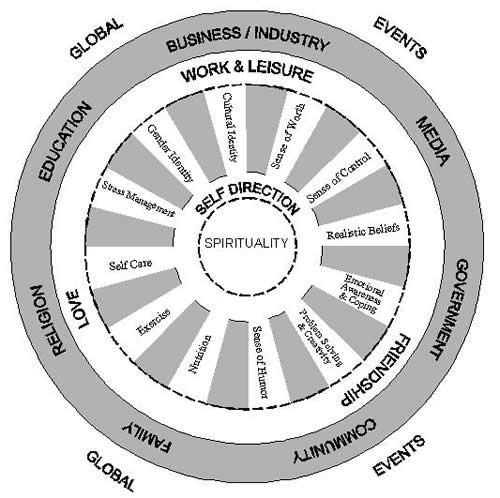
Welcome back to Wellness Wednesday! If you're interested in other posts in this series, check out my Wellness page here. Right now I'm discussing Life Task 3 from the Wheel of Wellness, which is work and leisure. Past posts on the "work" component of wellness include:

Today I'm going to expand a bit more on the idea of work overload, and what to do if you find yourself working too much overtime, to the point of exhaustion (or the other signs & symptoms I posted above). 

Cloud & Townsend, in their book Boundaries, have a few thoughts on work overload. They state the following: "If you are in a situation in which you're doing lots of extra work because you "need the job" and because you are afraid of being let go, you have a problem. If you are working more overtime than you want to, you are in bondage to your job. You are a slave, not am employee under contract" (Boundaries, p. 198). 

Employers can take advantage very easily of people who choose to not say "NO" when asked about increasing job opportunities. If they know someone won't say no when they ask someone to stay late, don't you think that the employer is going to take advantage of that? If you are constantly working overtime, what do you think that does to your health (physical, mental, emotional, spiritual) and your relationships? It's not so great. 

Here are some tips they offer for dealing with this issue (quoted directly from book, p. 198):
1. Set boundaries on your work. Decide how much overtime you are willing to do. Some overtime during seasonal crunches may be expected of you. 
2. Review your job description, if one exists. 
3. Make a list of the tasks you need to complete in the next month. Make a copy of the list and assign your own priority to each item. Indicate on this copy any tasks that are not part of your job description. 
4. Make an appointment to see your boss to discuss your job overload. Together you should review the list of tasks you need to completely in the next month. Have your boss prioritize the tasks... You may also wish to review your job description with your boss at this time if you think you are doing things that fall outside your domain. 

A few of my own thoughts- I like the list above, and think many people would benefit from following these steps. ALWAYS get a job description. This will give you ground to stand on and help you determine what is and is not reasonable for your job responsibilities. If you don't have a description, how will you know what your expectations are? 

Now it's your turn!
Are there some boundaries you need to set in the workplace when it comes to working overtime or doing too many things that fall outside your job description? How do you try to maintain health while you're at work?

Tuesday, March 13, 2012

How To Survive A Breakup {Part 2}

"If you're going through hell, keep going."
-Winston Churchil 

Today I'll be continuing my post on surviving a breakup. Breakups can be incredibly painful and overwhelming, and while you might not have actually had any say over the break up, you do have the choice of how you deal with it.
Here are a few more tips on surviving and grieving in a healthy way:

  • Allow yourself to feel whatever emotion comes in the moment. It’s OK to cry or to feel devastated. If you feel happy in the moment, allow yourself to feel happy while knowing that this doesn’t negate your pain. Allowing the emotions to come and go as they want helps.
  • Put healthy boundaries in place. If you are feeling attacked by your ex or his/her friends, remind yourself that you don't have to put up with it. Refuse to pick up the phone, walk away if you happen to run into them, etc... Do what you need to do in order to put distance between the two of you. (for some basic info on boundaries, click here)
  • Engage in healthy coping skills. In times of distress, we tend to use whatever we know works in order to cope. However, using unhealthy coping skills (i.e. food, alcohol, sex) will only create more problems instead of less. Implementing healthy coping skills is crucial in going through a break up or any sort of grief.
  • Help others help you. Others around you will want to do what they can to help make this time easier for you, but often feel awkward asking what they can do. Tell others what you need and what you would appreciate (i.e. a home cooked meal, a weekend away, a listening ear). You'll get what you need by being open and honest with others.

Remember to keep checking back for future posts in this series. Here are some of the past posts in this series:


  • How To Help A Friend Through A Breakup {Part 1}

  • How to Help A Friend Through A Breakup {Part 2}

  • How To Help A Friend Through A Breakup {Part 3}

  • How To Survive A Breakup {Part 1}


  • Now it's your turn!
    What's difficult about giving ourselves permission to feel whatever emotion we feel in the moment (another way of looking at it: Why is it difficult to allow ourselves to feel sad or happy while going through a break up)? 

    Thursday, January 19, 2012

    Playing the Victim Role To Stress

    "When we have been prevented from learning how to say no, our bodies end up saying it for us." 
    - Dr. Mate

    When we put our body into constant stress mode for extended periods of time, we will end up paying a price. Whether it is physically, emotionally, mentally, spiritually, or relationally, it will affect us in some way or another. I think sometimes we get caught in the trap of thinking that we are invincible to stress, and that somehow we can avoid paying the price.

    If that's how you think, and it certainly is tempting to think that way because it allows us to not have to change, let me break this to you: YOU WILL end up paying the price, and probably have already in some way.

    Today I want to focus on not playing the victim role! I think there's often the temptation to be the victim to stress. After all, events happen to us that we can't control, and we must simply react to what we've been given. This causes stress, doesn't it? Absolutely! However, when we play the victim role to most anything in life, we tend to take the passive approach, and use that thing as an excuse to not do x, y, or z in our life. That thing might make things much more difficult for us, but if we take the passive role, we end up handing our life over to that thing.

    And so it is with stress. Many of us have built our own prisons when it comes to stress, and kept ourselves in a passive victim role. We stay locked up in the prisons that we have built by our own choice. We don't always get to choose what happens to us, but we do get to choose how we respond. That means that we can choose if we want to be a victim to stress, or if we want to stand up and try to fight against it. 

    It WILL be uncomfortable at times. It will mean living differently then we have in the past. It will mean engaging in healthy stress management. 

    Here's my question to you: Are you willing to stand up and play an active role in fighting against stress in your life? Are you willing to say no, set limits appropriately, and take care of yourself? Are you willing to take control of your behaviors? 

    I invite you to join me in the journey of fighting against stress, and set up the structure of your life to limit the amount of stress that you experience!

    Now it's your turn:
    Why is it easy to play the victim role to stress, blaming it for things that happen in life instead of standing up and being responsible for our own behaviors? 

    Wednesday, January 18, 2012

    Wellness Wednesday: {Stress Management Part 3}

    Welcome back to Wellness Wednesday! It might be good to take a moment to refresh your memory about the Wheel of Wellness, and my wellness page includes every past "Wellness Wednesday" post! Remember that wellness isn't the absence of the negative, but the presence of the positive in our lives.
    Remember that I'm using the Wheel of Wellness to help visualize health in life:


    This will be my last post on the subtask of stress management. You can check out part 1 and part 2 here.
    Hopefully you are starting to realize that dealing with stress is crucial to your health, and that while it is definitely difficult to deal with at times, it is worth the time and effort.

    Here are a few tips for starting to come up with a plan for stress management in your life:

    • Learn to say no and limit yourself: It's easy to overcommit ourselves. It makes us feel important, it helps us avoid having to deal with "real life problems", or it allows us to continue in our people pleasing. Learning to set boundaries and say no will help limit the number of controllable stressors in your life. We need to learn to say no appropriately, and there are limits to what you can give. You may need to say no to things that are good in life in order to not over spend yourself.  (to learn more about boundaries, click here and scroll down to the "boundaries" heading).
    • Establish a regular practice of deep breathing: Deep Breathing will help control your heart rate, blood pressure, and allow your focus and concentration to increase: all necessary things in controlling our stress! I like to set an alarm for a few times during the day to practice. When you notice yourself starting to get stressed, immediately start deep breathing. 
    • Decrease your unhealthy coping skills, and implement healthy coping skills: Check out this post I wrote on healthy coping. Our unhealthy coping skills, while they seem to work initially, actually create more stress in the long run. Practice and implement healthy coping skills to help effectively decrease your stress. 
    • Don't Use Words Too Big For the Subject: In this post I did on using appropriate language, I talked about the possible detrimental ramifications on using words that are too big for the subject at hand. Watch how you talk to yourself when you're stressed. If you're using words like "horrible", "terrible", "completely overwhelming", "unbearable" or other similar words, you're likely to not only increase your feelings of stress dramatically, but you are less likely to function well in the middle of the situation. Use words that are appropriate for the situation. 
    • Engage in Self Care: In the midst of a crazy schedule and stress, the last thing that seems important is taking time to take care of yourself. Check out this post on self care for ways to take care of yourself!
    There are a few easy ways to care for yourself and decrease your stress on a regular basis. Come back tomorrow for a post on not playing the victim role to the stress in our lives! 

    Now it's your turn:
    What's your favorite way to stand up to stress? Why do we use words that are too big for the subject that we are talking about? How can we feel ok about saying no appropriately! 

    Wednesday, December 7, 2011

    Wellness Wednesday: {Self Care Part 1}

    Welcome back to "Wellness Wednesday", a midweek look at one aspect of our health and wellness in life. Remember that I'm using the Wheel of Wellness to help visualize health in life:


    If you need a little refresher, click here. We are currently in the middle of Life Task 2: Self Direction, and today we will moving on to another subtask, Self Care. This is an excellent time of the year to be focusing on self care, as any time holidays or family gatherings hit, it's easy to give up our self care activities. 


    Of course "self care" can include more things then we actually think. Myers & Sweeney define this subtask the following way:

    Not abusing substances, using seat belts, getting adequate sleep, obtaining preventive medical and dental care.


    How many of you, while sitting in the dentist's chair, think "I'm engaging in self care right now!" Hm. Probably not. 


    Before I get started on discussing some different aspects of this subtask of wellness, I thought I'd share some links to previous posts I've done on self-care (just to get you thinking!).
    10 Ideas To Refill Yourself
    Loving Myself, Loving Others
    Boundaries & Burnout
    Boundaries & Burunout {Part 2}


    When we don't take care of ourselves, we run the risk of burning out. That's why I think a discussion on boundaries & burnout is crucial in understanding why self care is so crucial. Make sure to check out some of the above posts, and I'll be back next week with a continuing discussion on self care!


    Now it's your turn:
    Have you ever been close to burning out? How do you view self care?

    Tuesday, December 6, 2011

    Tips For Reducing Stress During the Holidays {Part 1}

    Oh, for the good old days when people would stop Christmas shopping when they ran out of money.  ~Author Unknown

    Last year I did a post on Tip for Surviving the Holidays with Family. I think many of these tips are applicable in each of your lives (unless your family is, in fact, perfect!), so make sure to check them out!

    Stress levels can easily sky-rocket during the holiday season, which can place further distress on our relationships. Today I want to pass along a few tips for reducing stress during the holidays.
    • Prioritize Your Activities! There are so many great activities this time of year in which to participate. Christmas movies, Christmas concerts, parties, gift exchanges, caroling, cooking decorating parties: you name it, it exists and you've probably been invited to it. You can't do everything, so prioritize and say "no" to those activities that don't make the cut. For the people pleaser, this is difficult, but remember that YOUR HEALTH is important (if you are a people pleaser, click here and scroll down to the "boundaries" category).
    • Make Sure To Take Your "Me" Time: While this is a good season to look outside ourselves, give to others, and celebrate with one another, it's important to get a few minutes every day for self care. The ability to recharge ourselves helps create a buffer against holiday stress, and increases our patience towards those around us. 
    • Maintain healthy habits: During holidays it's easy to give up exercise, healthy eating, and sleep. Doing that will certainly make you feel worse both physically and emotionally. Make sure to continue your healthy habits as much as possible, and remember that balance is important!
    • Set a budget for yourself: Our stress can increase if we dig ourselves into a financial mess. Be wise with your spending, and make sure you are careful on how you spend. If you are lonely or feeling "low" emotionally, there can be a temptation to buy "stuff" in order to cope. It might help in the moment, but will not actually help the situation, and put you in a bigger mess when it comes time to pay the bills. This can be a HUGE stressor for months following Christmas, so make this "tip" a priority. (This is also why I started this post with the quote above).
    • Release the expectation of a "perfect" holiday: Most of us imagine the holiday in a certain way. Even if it isn't "perfect", this imagination tends to become our expectation of what the holiday will be. To be healthy, it is important to let go of expectations for the "perfect" meal, the "perfect" gifts for families, the "perfect" decorations for the house, etc... Do your best, but don't kill yourself over trying to make everything about the holiday perfect. You (or your children) will more then likely remember how stressful it was over how fun it was. 
    *Part 2 of this post will be coming later this week!

    Now it's your turn:
    How do you work on reducing the stress in any of the areas listed above? 

    Tuesday, November 29, 2011

    A Little Recap and Favorite Past Posts

    My posting schedule may be a little lighter this week... or at least lighter content wise. I had a fantastic Thanksgiving (more or less) with family & friends, with a few difficult situations thrown into it. I'm safely back home and have a busy week at work, mixed in with a few other commitments and trying to catch up on the week that I was visiting family. Last December I didn't have many readers yet, as my blog was brand new. Because of that, I wanted to post a few posts from last winter that stand out in my mind, and relate to this holiday season!

    Warming Up With A Cup of Tea <- There are some mental health/emotional benefits to tea as well!
    I Heard The Bells On Christmas Day <- This is one of my favorite Christmas songs. I didn't love it growing up, but a few years ago I learned the history of the song, and it's really interesting! Make sure to check this one out!
    Tips For Surviving The Holidays With Family <- Let's be honest. Sometimes family can almost ruin the holiday season. Here are a few tips to stay healthy and happy while being around your family over the holidays!
    My Little Lifesaver <- TOTALLY worth it!
    Serenity, Courage, Wisdom
    When There's A Winter Storm <- Tips for staying safe in the winter months!

    Now it's your turn:
    Feel free to share one of your OWN favorite winter posts here! I'd love to see them.

    Thursday, November 17, 2011

    Live Your Life!

    Your time is limited, so don't waste it living someone else's life. -Steve Jobs


    This is a pretty great quote, isn't it? I think it's easy to think we have a limitless amount of time. Even when we realize that we don't have an unlimited about of time, we can often live like we do. We forget that the days we are given are a gift that we have. 

    There are things that seem to take away the gift of the time that we have. Sometimes we feel as if physical & mental illness have robbed us of what our time could have been. Sometimes it's a relationship that seems to have robbed us of our time. Sometimes it's something beyond anything that we could control. 

    One thing that shouldn't rob us is our own decision to live the life of someone else, and to give over the control and power of our lives to another person. Being healthy in life involves, in part, having healthy boundaries. Remember that having boundaries means that we are responsible for our own thoughts, feelings, and behaviors. When we try to live someone else's life, we are not being responsible for our own "stuff" in life. When we live someone else's life, we lose out on the life that we have. We miss out on our own strengths, gifts, talents, and unique abilities. More often then not, we aren't content or happy either. 

    Don't waste your time trying to become a different person. Embrace who you are, your gifts, and your talents, and try to make you be the best person you can be! 

    Wednesday, October 26, 2011

    OCD Awareness: {Help! Someone I Love Has OCD! part 1}

    If a loved one has OCD, there are things that you can do to either hurt or help the situation. With a little knowledge, support, and research, you can be the healthiest individual you can be in helping support your loved one. Here are a few steps that you can take:


    1. Educate yourself and your family on OCD: OCD can be complicated and difficult to understand. On the surface, it doesn't make sense why an individual MUST do something to right something that has happened or something they thought about. When you educate yourself on the disorder, this begins to make a bit more sense. Reading books and finding websites, as well as talking to a doctor or therapist, will help you learn about the disorder. 
    2. Get support for yourself: From online and "in person" support groups, these can also be beneficial not only in educating yourself, but in processing your own thoughts and behaviors. 
    3. Engage in self-care behaviors: It can be draining at times in dealing with someone struggling with an illness or disorder. Taking care of yourself is essential to not only keep yourself healthy, but also to provide healthy support to those around you. Here are some ideas to help get you started
    4. Learn to identify cognitive distortions & start changing them! We each have cognitive distortions that sneak their way into our thinking patterns. Learn to change these in your own conversation, as well as helping those around you start changing. There are a number of cognitive distortions that are prevalent in OCD, and it's important that your loved one know these as well. Click here for information on Challenging & Changing Cognitive Distortions. 
    5. Learn to set healthy boundaries in your life: This will not only help you to engage in self-care, but it will also help you to maintain a healthy relationship with your loved one(s). Click here and scroll down to "boundaries" for a list of posts I've done on this topic. 
    Part 2 of "Help! Someone I Love Has OCD!" will be coming tomorrow. Keep your eyes out! (I'd also like to mention that these steps listed above are helpful for ANY mental disorder, not just OCD).

    Thursday, September 29, 2011

    Your Opinion Isn't My Business

    “Your opinion of me is none of my business.” –Randy Pausch, “The Last Lecture”

    This post really should've been done many months ago, in my series on Boundaries. I suppose that we can each use a refresher in regards to boundaries on a regular basis, so this will serve as that refresher for each of you. If you started reading this blog after I did the series on Boundaries, please go back and read the posts. The concept of boundaries is one that is often overlooked, but is essential for maintaining a healthy life, and more importantly, healthy relationships. There is little chance of having healthy relationships if you cannot maintain boundaries with those people. 


    A quick reminder: Boundaries "define what is me and what is not me" (Cloud & Townsend). This means that I need to know "what is me", and therefore what I am responsible for and what I can control in life. This means that I am responsible for my own thoughts, feelings, and behaviors. I am not responsible for the thoughts, feelings, and behaviors of others, and I cannot try to get others to take responsibility for MY thoughts, feelings, or behaviors. 


    How does that, then, apply to the quote above? Why do we try to take on the things another thinks and make them our business, when having healthy boundaries clearly states that those things are outside our realm of control?


    How much time, stress, energy, and anger do we invest on making another's opinion our business? Furthermore- how often do we change who we are because another doesn't like something about us? We try to fit in, or become a version of someone else instead of ourselves. It's a shame to lose who we are because we take on the opinions of others. 


    Now it's your turn:
    What do you try to make your business that is actually none of your business? What's happened when you take someone's opinion of you on as your business? 

    Wednesday, August 10, 2011

    Wellness Wednesday: {Sense of Control}

    Welcome back to Wellness Wednesday! If you haven't read the rest of the series, you can catch up on the posts here:
    Wellness Wednesday: {An Introduction}
    Wellness Wednesday: {An Introduction pt. 2}
    Wellness Wednesday: {The Wheel of Wellness Part 1}
    Wellness Wednesday: {The Wheel of Wellness Part 2}
    Wellness Wednesday: {Life Task 1: Spirituality}
    Wellness Wednesday: {Life Task 2: Self Direction} 
    Wellness Wednesday: {Sense of Worth}

    For those of you who have read some of the posts, you might recall that I'm using the idea of the Wheel of Wellness to visually represent wellness for the individual.


    Last week I introduced the first subtask under "self direction": Sense of Worth. Today I'll talk about the 2nd spoke of the wheel, sense of control.

    Myers & Sweeney define "Sense of Control" the following way:


    Beliefs about mastery, competence, self-confidence, locus of control, self-efficacy, presentation of oneself as having influence through exercise of imagination, knowledge, skill, and choice; sense of planfulness in life; ability to be direct in expressing one’s needs (assertiveness)

    Sense of control is an interesting component of wellness, as I think this is generally looked over when thinking about the idea of wellness. I think that boundaries play a big part in the idea of sense of control. Remember that with healthy boundaries, we realize that we can only control our thoughts, feelings, and behaviors. No one else can control these things in us unless we choose to give up our control. When we understand what we have control of in life, we become a healthier individual. If you'd like to know more about establishing and growing healthy boundaries in your life, you can click here

    The term "locus of control" may be unfamiliar to some of you. An individual either has an internal or external locus of control. With an External Locus of Control, an individual believes that his/her behavior is guided by fate, luck, or other external circumstances With an Internal Locus of Control, the individual believes that his/her behavior is guided by his/her personal decisions and efforts. Those with an internal locus of control tend to be healthier, less stressed, and achieve more in life then those with an external locus of control. 

    How many of you know what you need in life, but don't tell others around you that you need it? It's easy to feel frustrated or angry at those people for not giving what you need, but can they be blamed if you choose to not tell them? A sense of control in life also includes a willingness to speak out when you need something in life, and allow yourself to be heard! 

    I love that a sense of planfulness is a component of health in life. I think in the healthy living world, we talk about setting goals to help you meet your desired outcomes. Setting goals is a crucial part of successful behavior change and health. Unless we know what we're aiming for, we won't know how to get where we want to be. If you'd like to know more about setting goals for successful behavior change, you can click here

    Here are a few questions to ask yourself:
    1. Do I have healthy boundaries? Do I take responsibility for my own thoughts, feelings, and actions? Do I blame others for the things I'm responsible for in life?
    2. Do I have an internal or external locus of control in life? What can I do to move to a more internal locus of control?
    3. What are my needs in life? Do I let others around me know what my needs are?
    4. Do I have a sense of planfulness in my life? Do I write goals for my life?
    5. What activities am I competent in? How do these play out in my life?
    Throughout this series so far, what are you realizing about wellness in your life? Do you think healthy boundaries are hard to establish?

    Wednesday, August 3, 2011

    Wellness Wednesday: {Sense of Worth}

    Happy Wellness Wednesday! For myself personally, I love doing these Wednesday posts, as they are a good check and reminder for myself as well. If you've missed any of the posts, here are the previous posts for Wellness Wednesday:

    Wellness Wednesday: {An Introduction}
    Wellness Wednesday: {An Introduction pt. 2}
    Wellness Wednesday: {The Wheel of Wellness Part 1}
    Wellness Wednesday: {The Wheel of Wellness Part 2}
    Wellness Wednesday: {Life Task 1: Spirituality}
    Wellness Wednesday: {Life Task 2: Self Direction}

    For those of you who have read some of the posts, you might recall that I'm using the idea of the Wheel of Wellness to visually represent wellness for the individual.


    Last week I introduced the second life task, which is Self Direction. Within the second life task there are 12 subtasks. Right now I'm planning to start at the top and work my way around the circle clock wise. 
    Today, I'm discussing the first subtask: Sense of Worth.

    Myers, Sweeney, and Witmer define this subtask the following way:


    Satisfaction with self, acceptance of self with one’s imperfections, acceptance of one’s physical appearance, valuing oneself as a unique, worthwhile person.


    The term sense of worth could also be interchanged here with "self esteem". 

    When I think of self-esteem I naturally think "can you be ok with you and love yourself for who you are?" I believe that's what self esteem boils down to. Unfortunately, there are a lot of things that chip away at our self-esteem: being bullied, harsh or abusive words and actions by a family member, or unrealistic expectations of self to name a few. We can easily become a mangled piece of who we originally were, and it can take a lot of energy and strength to remain strong in who we are in the hot fire of the world. 

    I've been a lot of posts throughout this blog on various things that help to increase ones sense of worth in life. Here are some of the links:

    Boundaries: Establishing healthy boundaries helps define what is me, and what is not me, what is my responsibility, and what things are the responsibility of others. A lack of boundaries can lead to a confusion of one's identity, so to have a strong sense of worth, healthy boundaries are important to implement. (Click here to find the boundaries category of posts)

    Cognitive Distortions: When we distort ourselves, the world around us, or even others in our life, we can easily confuse things. These distortions can distort our identity and sense of self. To have a healthy sense of worth, it's important to try to decrease the cognitive distortions used in every day life. (Click here to find the cognitive distortions category of posts)

    Perfectionism: As the definition above says, sense of worth involves acceptance of one's imperfections. If a person holds to perfectionistic standards, they will constantly be a failure to one's self, which obviously will decrease a sense of worth. (Click here to find the perfectionism category of posts)

    Affirmations: Awhile back I wrote about using affirmations as a way to increase self esteem. I've seen this help a large number of clients, and believe that this is a very helpful component. You can click here to read about it!

    Accepting Your Physical Appearance: I wrote a post on developing a healthy body image, which is part of having a healthy sense of worth. You can click to read it here.

    Each of these posts that I've linked to includes steps that you can take to help with your journey. Remember that health is a never ending process, so give yourself time to work on changes! Self esteem doesn't happen overnight!

    What is one thing that helps you have a strong sense of worth in life?
    What makes you a unique, individual person?

    Friday, June 17, 2011

    Fantastic Fridays (Life's Tiny Delights)

    Do you remember last week's post on my Life's Tiny Delights/ Fantastic Friday? If not, click on the link and check it out. I still haven't found a title that I like, so please be patient as I try to figure this out. If you have suggestions, I'd love to hear them! The link above will give some background to this little "holiday" on my blog, and trying to develop a practice of mindfulness in my life.

    With that being said, here's something I'm loving right now:
    I'm pretty sure this is one of the most colorful and decadent platters of dessert I've ever eaten off of. Seriously- how amazing does this look? While eating, I tried to be very present in the moment, and notice the tastes and textures while I was eating it. YUM! 

    Search terms are always interesting & fun to see (at least I love looking at them on other blogs!), so here are some from the last week: 
    • "It's not about me" Boundaries (excellent search by the way. You can read it here)
    • Chobani lactose intolerance
    • Could you wear contacts while flying a jet? (yes- I'm a professional in this area:) This came from my post last week on health & safety while flying). 
    • Grandma health
    • Mediterranean Pizza Ingredients (you can find this recipe under the "recipe" tab above)
    It seems like this is a pretty wide range of random searches, doesn't it? 

    Now here's a few things I'd like to know from you:
    What would you like to see in a lighthearted Friday post?
    Do you have any fun plans for the weekend?


    Wednesday, April 13, 2011

    It's Not About Me!

    Having healthy boundaries seem to be a big struggle in life for many  most people in the world. Because of this, I'm often looking for different ways to explain these to people, or at least give them different tools to implement boundaries (For my series on boundaries, click on this link and it will redirect you to all the other links on boundaries. For an alternative way to access my posts on boundaries, you can click the "boundary" label at the bottom of this post!)


    It's important to remember: We are responsible for our own thoughts, feelings, and behaviors. We get into problems when we try to get others to take responsibility for our thoughts, feelings, or behaviors, or when we try to control those of others around us. That is NOT healthy. 


    All of that being said, sometimes when people react poorly to us, it's hard to brush it off and let it go. Instead, it's easy to ruminate about it, and let the thought fester within us. Here's where the phrase IT'S NOT ABOUT ME comes in handy. When someone has a negative reaction, I need to go back and check myself. Was I responsible for my words or actions? If I was responsible and respectful with that, then that's all that I can do. If someone chooses to respond negatively (i.e. people will perhaps not like the boundary you've established and react angrily towards you), then that's about them and their issues. Perhaps they aren't being responsible for their feelings or actions. It's easy to take their reaction personally, which can increase frustration, stress, anxiety, or tension within you. When we take responsibility for their actions, we aren't having healthy boundaries. 


    If you've checked yourself and you HAVE been responsible, appropriate, and respectful, then you can repeat "it's not about me" to yourself. This will re-direct your thoughts and will help to let the reaction of the other person go. There's no reason you need to hold onto the negative reactions of others. So remember: It's not about me... and let it go... 


    What do you do to help let the negative "stuff" from others go? 

    Friday, March 25, 2011

    Do You Hold the Reigns, or Does Someone Else Have The Power?

    I love quotes! I'm sure after this week you haven't figured this out yet... This quote has stuck out in my mind for two reasons: The first-It's SO TRUE! The second-it reminds me of boundaries, and you all know how much I love talking about boundaries! (For my series on boundaries, click on this link and it will redirect you to all the other links on boundaries. For an alternative way to access my posts on boundaries, you can click the "boundary" label at the bottom of this post!)

    Any person capable of angering you becomes your master; he can anger you only when you 
    permit yourself to be disturbed by him.
    -- Epictetus (55-135 AD) Greek Philosopher


    Remember that with boundaries, we control our own thoughts, feelings, and actions. If we let another person control our feelings (such as anger), then we hand over the control and reigns of our life. If another person controls our feelings, then they control if we are ever happy, or when we get over our anger. And THAT doesn't sound great, does it? I'm certainly not ready to sign over the power in my life to someone else like that.

    What are your thoughts on this quote? Do you permit others to have power over your life?

    Thursday, March 3, 2011

    10 Ideas to Refill Yourself {I can't give what I don't have pt 2}

    In yesterday's post I introduced the idea that "I can't give what I don't have." Unless I'm healthy and taking care of myself, I will very quickly not have much to give to my clients. So this begs the question, "how do I take care of and refill myself"?
    Of course I'd love to say that I can afford to get my nails done every week, and go to the spa each weekend (I think I'd definitely feel relaxed if I could do that!). However, I can't afford that, but that doesn't mean that I can't still take care of myself.

    Here are a few of my tips and ideas for refilling myself:


    1. Limit my number of one way/helping relationships: I give all day at work to my clients, and obviously it isn't appropriate for them to refill me. Because I'm giving all day, I need to have two way relationships with others after work, where there is a mutual give and take. It's fine to give of yourself, but you need to be able to receive as well.
    2. Unplug! It's tempting to be constantly checking emails, texts, twitter/facebook updates, etc...but it's not a mental break. One of my rules is that I don't check my work email when I'm at home at night. And I'll check it at most one time over the weekend. Nothing is an absolute emergency that can't wait until the next morning.
    3. MOVE. Whether you turn on music and dance in your living room, go on a walk with a friend, go on a run, or some other form of physical activity, it is important for your mental & physical health! This will help to decrease some of the stress and tension that easily builds up!
    4. Enjoy Nature. Find the beauty in nature, capture it in a photography, or mix nature and moving together.
    5. Keep a Thankfulness Journal. Remember my post on the Thankfulness Project? This can help to increase mood and to refocus on the positive.
    6. Incorporate Deep Breathing. Establish a regular practice of deep breathing in your life. This helps slow down heart rate, decrease stress hormones, and increase focus and concentration. Whether you are sitting in a meeting, cooking dinner, or having a conversation with a friend, you can engage in this process!
    7. Take a Bath
    8. Read a Book For Fun
    9. LAUGH. Remember that Sense of Humor is one of the 17 components of wellness. Spend a few minutes laughing every day.
    10. Learn to say no! There will always be more good things to be involved in then there is time. Learn to say no so you don't overcommit yourself or stretch yourself too thin. Engage in a few things wholeheartedly instead of giving half-heartedly to many things.


    Those are a few of the things that I have found to be helpful in giving to myself so that I can keep giving to others. Let me say this: It can be incredibly hard to do this, so in no way am I suggesting this is always simple to do. However, to be healthy you MUST take care of yourself!

    What activities do you do to refill yourself? 

    Wednesday, March 2, 2011

    I Can't Give What I Don't Have...

    Remember a few months back when I did a series on Boundaries? (If not here are a few of the links:  basics, active process,burnout-1, burnout-2, laws of boundaries-1, and laws of boundaries-2)


    So, a quick reminder of boundaries: Boundaries are like invisible property lines that define what is me, and what is not me. What "is me" (what I am responsible for) would include my thoughts, my feelings, and my actions (behaviors). I can't make others be responsible for mine, and I can't take on the responsibility for others. Doing this is to have poor boundaries, and will lead to unhealthiness in our self and in our relationships with others. We can't have a truly healthy relationship without having healthy boundaries. 


        “You may need to set boundaries on people in real need. If you are a loving person, it will break your heart to say no to someone you love who is in need. But there are limits to what you can and can’t give; you need to say no appropriately” (Boundaries, p. 250).


    Over the course of the last month, I saw a lot of conversations in blogs and on twitter about "self-love" and taking care of ourselves. The problem with boundaries is that they can seem selfish. However, we only have so much that we can give before we run ourselves into the ground. I always tell my clients "You can't give what you don't have." If you are going to pour into others, then you need to poured into to be refilled, so that you have something else to give. Without being refilled, we will run dry fairly quickly. So, while it seems selfish to say no to people sometimes, I believe that it's one of the most loving things we can do. Yes, we may be giving a little less in the moment, but long term we'll be giving a lot more. And, if we hit a point of burnout (links to information on burnout at the top of this post), then we can't give anything to anyone else around us. 


    How do you set limits in life? Do these limits feel selfish? Any examples of limits you have to put in your life to keep you healthy?


    Sunday, February 13, 2011

    Loving Myself, Loving Others


    If you aren't good at loving yourself, you will have a difficult time loving anyone, since you'll resent the time and energy you give another person that you aren't even giving to yourself.
    ~Barbara De Angelis

    Love is the only way to grasp another human being in the innermost core of his personality. No one can become fully aware of the very essence of another human being unless he loves him. By his love he is enabled to see the essential traits and features
    ~Viktor Frankl

    Well, tomorrow is Valentine's Day, and twitter, Facebook, the TV, and stores are abuzz with conversations of love. Some love the day, some hate the day, and some people just don't care. But, if we look past the day, there's still this little thing called love. Whether it's love for ourselves, our pets, job, friends, family, or significant other, we all need and desire love, and we also give love to others.


    I often witness others (and have been guilty of this myself) giving so much of themselves (in the name of serving or loving others), that they have nothing left to give to themselves. Does this sound familiar to any of you? 
    Here's the truth: There will ALWAYS be people who are in need, people that you can give to. If you don't set a boundary there will never be a point to your giving, because people will always take. Many of us were raised with the message that the most selfless thing we can do is to give unconditionally. I feel like I'm continuously fighting against this idea with my clients. 


    Let me explain: I think that we all need to be serving others and giving to others. Being selfish is not healthy. But being a little selfish is. If we don't take care of ourselves, we won't be able to take care of others effectively. Let me say that again: If you don't take care of and love yourself, you will NOT be able to take care of others for very long. Sure, you will be able to for awhile. But fairly quickly, you will burn out. And, if you are at a point of burn out, you will have absolutely nothing to give to others. It's through being a little selfish (actually, healthy!) and loving ourselves FIRST, that we then have something to give to others. It is through loving ourselves that we can really love another person.


    To Love ourselves we need to respect ourselves, and have good self-esteem and confidence. We need to be in healthy relationships, accepting love from others. We need to set healthy boundaries, decrease cognitive distortions, and increase overall health and wellness in our lives. This is an active and intentional process. 


    So, my question to you is this: What do you love about yourself? How do you love (take care of) yourself?