Showing posts with label behavior change. Show all posts

Wednesday, February 8, 2012

Wellness Wednesday: {A Review Of Life Task 2}

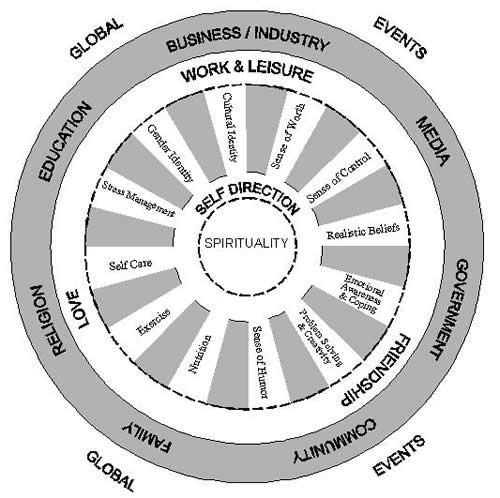
Welcome back to Wellness Wednesday, a fun mid-week look at the areas of wellness in our lives. To remind you, in talking about wellness I'm discussing the positive factors in life that help protect us from the events of life. Wellness is therefore not about the absence of the negative, but the presence of the positive. I just finished talking about the 2nd (out of 5) life tasks, and I thought this would be a good time for us to review these components.


Life Task 2 is made up of 12 subtasks:

A few questions to get you thinking:
  1. What is your greatest area of strength? 
  2. How does this strength further your overall wellness?
  3. What are your greatest areas of improvement?
  4. What is one step in each of these areas that you can take to help improve those areas? 
  5. How does your overall wellness in nutrition affect your stress management?
  6. What's one new healthy coping skill that you could implement?
It's interesting to think about how the health in one area of our life affects our health in another (either positively or negatively). It's important to regularly evaluate how each of the areas of our wellness is currently impacting us. 

Now it's your turn!
What are your thoughts on wellness in your life? What areas are easier to be healthy in, and what areas are a little more difficult? 

Wednesday, February 1, 2012

Wellness Wednesday: {Cultural Identity}

Welcome back to Wellness Wednesday! For more information on the Wheel of Wellness, you can check out my wellness page, which includes every past "Wellness Wednesday" post! Remember that wellness isn't the absence of the negative, but the presence of the positive in our lives.
Remember that I'm using the Wheel of Wellness to help visualize health in life:


Alright, after today's post we'll have finally made it through all of Life Task 2 of the Wheel of Wellness. So, today we move on to the final subtask of Life Task 2: Cultural Identity!

Myers & Sweeney define this subtask the following way:

Satisfaction with one’s cultural identity, feeling supported in one’s culture, valuing relationships with people of many cultures, transcendence of cultural identity, competency to cope with stress of cultural identity


When most people start listing dimensions of wellness, this is not one that is often mentioned. However, I think it's an important component of wellness, and once again I'm happy that Myers & Sweeney have included this in the dimensions of Wellness. Myers & Sweeney say the following about cultural identity: "cultural identity incorporates racial identity, acculturation, and an appreciation for the unique aspects of one's culture and is positively related to well-being. It is a positive personal strength that enhances growth and development across the life span" (Myers & Sweeney, 2005, p. 25). Of course our views on most things in life are in some way influenced by our culture as well.

For many Caucasians, it can feel like we don't have a culture, or at least culture the way that some other groups of people experience culture. For those of you who feel that way, here's an idea of how to connect with culture:

  • Determine what countries your ancestors come from. Do a bit of research to figure out what the beliefs, habits, and holidays of those cultures are.
  • Match these values, beliefs, or habits with your own life to see what has trickled down from these cultures. 
  • Is there a way that you can incorporate your country of origin's celebrations into your life here? This can help you gain an appreciation of other cultures, all while gaining knowledge and having fun! 
Once you go looking for it, it's interesting how many things we do that come from other cultures. 

And a few questions to get you thinking:
  1. Are there things you can do to learn more about other cultures and gain an appreciation of them?
  2. How can you increase your knowledge of your own culture?
  3. What can you do to interact with people from other cultures? How can you "get outside yourself"? 
  4. Have you ever felt unappreciated or discriminated against because of your culture?
  5. If you experience stress due to your cultural identity, what steps can you take to keep yourself healthy? 
Now it's your turn:
Do you feel you have a culture? How can you increase your appreciation of both your own culture and of the cultures around you?

* Myers & Sweeney. Counseling For Wellness: Theory, Research, and Practice. (2005). 

Wednesday, January 25, 2012

Wellness Wednesday: {Gender Identity}

Welcome back to Wellness Wednesday! It might be good to take a moment to refresh your memory about the Wheel of Wellness, and my wellness page includes every past "Wellness Wednesday" post! Remember that wellness isn't the absence of the negative, but the presence of the positive in our lives.


Remember that I'm using the Wheel of Wellness to help visualize health in life:


Today we'll be moving on to our next subtask of Life Task 2: Gender Identity. Only one more subtask for Life Task 2 to go!

Myers & Sweeney define this subtask the following way:

Satisfaction with one’s gender identity, feeling supported in one’s gender, valuing relationships with people of both genders, transcendence of gender identity, competency to cope with stress of gender identity.


This can be a hot topic for people, and I'm glad that this was included in the 17 components of wellness! It obviously goes without saying that if we don't feel valued and accepted for who we are, that will affect our emotions and our health. I also think it goes without saying that we shouldn't belittle someone or make jokes at someone's expense simply because of their gender.

A few questions to get you thinking:

  1. How are you supportive of people in regards to their gender?
  2. Are there any words or actions you use that devalue a person because of their gender? If yes, what can you do to change this?
  3. Do you have friends of both genders? If no, what makes you stick to one and not the other? 
  4. Why are friendships with both genders healthy?
  5. Do you ever experience stress because of your gender? If yes- what are some coping skills you can use to stay healthy? 
  6. How do you embrace your gender identity?
  7. How does health, or a lack of health, impact other components of wellness? 
Now it's your turn:
What are some ways we can show value to each person and help others to feel supported in their gender? What are some ways you see people devaluing others based on their gender? Other thoughts on gender identity? 


Sunday, January 15, 2012

Weekend Wrap Up

This week started out with beautiful, sunny, 50 degree weather, but by the end, it dropped to the teens, with a wind chill factor in the negative digits. Burrrr! Winter has arrived.

Today I'd like to talk briefly about pinterest. I stumbled on this post on pinterest etiquette, which I highly recommend reading! Pinterest is a great place for bloggers to highlight their posts, but if we don't pin appropriately, we can end up "harming" bloggers and their copyrighted property. The author suggests the following guidelines:

Pinterest can be a great asset to bloggers, so lets make sure to pin responsibly, ok?

A recap of my posts from the week:


As always, it's sunday which means it's time to set some mini goals for the week! Health is a series of small choices and decisions along the way, so don't discount creating mini goals for yourself!

As bloggers, let's start pinning others' posts that we enjoy to help each other out, but lets do it appropriately, ok?

Now it's your turn:
What's one of your goals for the week? Are you on pinterest? 

Thursday, January 12, 2012

Motivation for Change

If you don't know where you are going, you will probably end up somewhere else.  ~Lawrence J. Peter

Motivation is when your dreams put on work clothes.  ~Author Unknown

Over the past few weeks I've addressed a number of aspects of behavior change that people tend to skip over on their way to attempting to change something in their life. Here are the previous posts in this series:

Before you start to change behavior, it's good to know why you'd like to change your behavior. The fact of the matter is that behavior change can be a difficult, long, hard, tedious process. There needs to be something we hold on to that will continue to motivate us forward when we want to give up (and for most of us, that time will come at some point). As you think about your dreams and what you'd like to achieve through behavior change, I'm wondering if you know what is motivating yourself forward. This "what" and "why" will help keep you going when the voice inside tells you to give up, that it isn't worth the time, energy, or work involved. 

Once you figure out what that motivation will be, write it down somewhere and read it regularly. A bathroom mirror or refrigerator are both good places to put motivations, as we tend to look at those places many times a day. The more we repeat something, the more it becomes an automatic thought. Because thoughts lead to our feelings and our behaviors, we need to get our thoughts right before we move forward. 

Let's look at a few examples:
Goal: Get healthy by working out 3 days a week (2 days running, 1 day biking)
Motivation: I'm choosing to exercise and get healthy because I desire to __________. (fill in the blank could be anything like the following: be an active grandparent one day, live a long, healthy life, feel better and stronger about myself).

Goal:  Correct my distorted thoughts and change these to rational thinking patterns
Motivation: I'm choosing to do the hard work of learning to challenge and change my distorted thinking patters because I want to ______. (fill in the blank. i.e. decrease the depressed or anxious feelings I experience, be a good role model to my children, be happier each day). 

See what I mean? This step, combined with the steps listed above, will start to set you up in the best way possible for being successful at your behavior change. 

We each do what we do for a specific reason. It's helpful to find out what the reason is that we engage in our current behavior, and create a new motivation for our new behavior. 

Now it's your turn:
What are some of your "motivations" for the year?

Wednesday, January 11, 2012

Wellness Wednesday: {Stress Management Part 2- Eustress}

Welcome back to Wellness Wednesday! It might be good to take a moment to refresh your memory about the Wheel of Wellness, and my wellness page includes every past "Wellness Wednesday" post! Remember that wellness isn't the absence of the negative, but the presence of the positive in our lives.


Remember that I'm using the Wheel of Wellness to help visualize health in life:


Today I'm continuing my discussion on the subtask of Stress Management. You can see "part 1" of this subtask here.

I don't think we can have a real discussion on stress management without discussing what "stress" actually means. What IS stress, then? Basically, it's your body's physical and psychological response to anything that you perceive as overwhelming, alarming, or threatening. It's a biological process, with a wide-ranging set of events in the body.

Here's the thing: Not All Stress Is Bad! Sometimes I believe we are trained to think that any and all stress is a bad thing, and we start to panic when we feel stress coming on in our lives. But not all stress is bad, and, in fact, a small amount of stress is actually good for us! Even good stress (i.e. a new job, marriage, or a baby) can become unhealthy and taxing on the body if not properly dealt with.

How is stress good? Here are a few things that stress actually provides for us:

  • initiates invention & problem-solving capabilities and moves us towards creativity
  • It can give us that final push towards making changes or adapting to something
  • It can keep us healthy and happy
  • It pushes us out of our "love affair" with comfort (we can't live within this comfort zone all the time, because we won't change or grow. We become stagnant. Good stress actually helps us be "ok" with getting outside our comfort zone). 
Watch how you react the next time you start feeling a slight amount of stress. Do you panic and freak yourself out? Remember, what we think affects our feelings and our behaviors. The more you say "I'm stressed, I'm so stressed out, I'm overwhelmed", the more you feel overwhelmed and out of control". If you can acknowledge that you are feeling a slight amount of stress and you are choosing to engage with it in a healthy manner, it becomes manageable, and won't take over your life. Does that make sense? 

Here's your challenge: Watch how you talk to yourself when you start feeling stressed? Do you ramp your stress up, or do you acknowledge it for what it is without freaking out?

Now it's your turn:
Do you ramp up your stress level more then it needs to be? How can you use stress for your advantage without letting it overwhelm you?

Wednesday, January 4, 2012

Wellness Wednesday: {Stress Management Part 1- healthy coping}

Welcome to the first Wellness Wednesday post of 2012! It might be good to take a moment to refresh your memory about the Wheel of Wellness, and my wellness page includes every past "Wellness Wednesday" post! Remember that wellness isn't the absence of the negative, but the presence of the positive in our lives.

Remember that I'm using the Wheel of Wellness to help visualize health in life:


Today we will continue discussing Life Task 2 (Self-Direction), and begin discussing the subtask of "Stress Management".

Myers & Sweeney define "Stress Management" the following way:

General perceptions of one’s own self-regulation, seeing change as an opportunity for growth rather than as a threat to one’s security, ongoing self-monitoring and assessment of one’s coping resources, structuring-ability to organize and manage resources (e.g., time, energy, seeing limits, scheduling); need for structure, satisfaction with one’s stress management ability.


Whew! That's quite a mouthful, right? Obviously there's quite a bit involved in stress management, so I'm planning to break this into a few different posts.

Today I'm going to briefly discuss "one's coping resources". A few weeks ago I wrote a post on Healthy Coping Skills that may be helpful for you in determining your own ways of coping. The interesting thing about coping is that it is an activity that can be done before, during, and after the stressful event. Of course this coping will look a little different each time, but it is important to implement this at various stages of stress. Family and Friends play a huge part in healthy coping, as does engagement in faith/religion (social integration is a key in stress management!).

Here are a few questions to ask yourself about how you cope:

  • What things do I naturally go towards to help myself cope with stress (i.e. food, alcohol, TV, music)?
  • Who can I count on in life to help provide coping support when I am stressed and overwhelmed?
  • What aspects of faith and spirituality can help me cope with stressors in my life?
  • What things can I do to cope that are healthy and safe for me?
  • How can I increase my sense of control in this situation to decrease my stress?
  • What things would be helpful to include in my "coping toolbox" so that I'm prepared when stress comes my way?
If you can establish a "coping plan" beforehand, then you'll have something prepared when stress and negative life events happen. Having a plan already created will instantly decrease some of your stress, and will provide you with people, places, and things that will be healthy for you!

Next Wednesday be on the lookout for Part 2 of the "Stress Management" subtask!

Now it's your turn:
What sorts of people, places, and things might be helpful for you to put in your "coping toolbox" so you're prepared for the stressful moments in life? Are there negative ways you cope that you would like to decrease?

Tuesday, January 3, 2012

Establishing Mini-Steps to Attain Your Dreams

We all have big changes in our lives that are more or less a second chance.  ~Harrison Ford

I know that January is a natural time for people to make changes (If you don't feel ready to change something, please don't cave into the pressure though! It is better to make changes once you are prepared.), so I want to make sure to do a few posts to help you go into the behavior change with the greatest possibility of success!
Previous information about behavior change includes:
Today, let's talk about dreaming. Sometimes we fear our dreams, or feel that we have to edit them before we can say them aloud. Dreaming is good, and can lead to fantastic changes in our lives. However, I don't think it's enough to just stop at saying the dream. The dream is the end goal, but there's a lot of steps in life that get us to the end goal. It's important to set mini goals to get us to our dreams.

Here's an example:
Dream: Getting published
Mini-Goals
  • Create list of places to be published
  • Complete research on topic (could create mini-steps for this)
  • Network with people in _______ field
Dream: Increase My Self Esteem
Mini-goals:
  • Determine what is holding down my self-esteem
  • Create list of negative self-talk & negative beliefs about self
  • Engage in a practice of challenging & changing cognitive distortions
  • Implement a practice of daily affirmations
Of course you'd need to determine what mini-goals would work for you, and brainstorming is certainly an important step in this process. Dreaming is GOOD, and we shouldn't be afraid of it! Don't just stop at your dream, but establish a plan to get yourself to that dream. You CAN do it, but it may take some time and hard work, so be patient!

Now it's your turn:
What are your dreams for 2012? 

Sunday, January 1, 2012

2012! A Few Considerations Before Changing Behavior

HAPPY New Year! I truly can't believe that we are in 2012 already. I hope you all had a great and safe night ringing in the new year! I spent it with people I deeply care about, and had a blast celebrating. The nice thing about a new year is that it can be a new start to our life. Sure, the problems and situations we are in on December 31st don't go away magically when the ball drops, but the ball dropping can add some motivation or renewed determination to make changes.

The fact of the matter is that New Years Resolutions have become a joke for many people because they are easily dropped or abandoned. Behavior change can be tough, and successful, long term behavior change can be incredibly difficult to achieve. I'm big into setting things up right to create for yourself the biggest chance of successfully changing your behavior. Yes, it takes work, but it IS worth it.

A few things to consider:

  • While there is pressure out there to make your resolutions and start on January 1st, if you don't feel prepared yet, don't start making changes! It is OK to wait until a later date to start your behavior changes.
  • Making changes is significant at any date, not just January 1st!
  • Think big picture dreams, and outline smaller steps to get you to your bigger goal. This will allow you to feel like you're making progress by meeting your smaller goals, and the entire picture won't be so overwhelming. 
  • Track Your Behavior: Let me say it again- TRACK YOUR BEHAVIOR both before and during the behavior change. Check out the post I linked to under "track your behavior" to see some tips for doing this!
  • Find a support and accountability team. There's no reason we need to change behavior completely alone. 
I'll be doing a few more follow up posts on behavior change over the next weeks, so keep an eye out for it! I'm all for making goals for the new year, and think it's a great time to reevaluate your life. Please be smart about your behavior change and set yourself up for the highest chance of success possible!

Now it's your turn:
What are your dreams for 2012? What sorts of changes would you like to see in your life? Do you set resolutions or goals for yourself? 

Tuesday, December 20, 2011

Track Behavior Before You Change It!

January 1st, the New Year, the start of finally "getting healthy"... yup, that's right. It's time for New Years Resolutions or Goals. First of all, it is OK to not create a new goal for yourself for the year, and it is also ok to not create one until say, February or March. Setting goals is a healthy thing, no matter what time of the year it is!

 However, New Years Resolutions have become notorious for being "a joke"; they are something we tend to make but not actually follow through on in our life. So, before we get any closer to New Years, and you all creating some new goals for your life, I thought I would begin to discuss how to set yourself up for the greatest amount of success in meeting your behavior change goals.

Part of the reason why New Years Resolutions tend to not be followed through on is because the entire "behavior change process" isn't done in a successful manner. Have you ever heard the phrase "you can't change what you don't know"? (If you haven't, well, I guess you just did) That phrase really describes the entire behavior change process. People tend to just jump into behavior change without knowing how that behavior currently plays out in their life.

Here are a few steps to do BEFORE changing your behavior that will set you up for the greatest chance at success:


  1. Decide What Behavior You'd Like To Change: Obviously you'll need to choose a behavior or two that you would like to change. Make sure to not set too many, as it is easy to feel overwhelmed about the entire thing and quit.
  2. Track Your Current Behavior to Learn How It Plays Out In Life: That's right, I said track the behavior. Figure out what excuses you're making, what makes you less likely/more likely to engage in said behavior you'd like to change, and figure out what times of the day/situations/people won't aid this change. We engage in behaviors for a specific reason, and there is some benefit we get out of maintaining our present behavior. Figure out what that reason is! We need to know what our excuses are and what things make it difficult to be successful at that behavior change. Here's an example- I found myself eating a lot of unhealthy snacks when I got home from work while unwinding and cooking dinner. By the time I sat down for dinner, I wasn't all that hungry for the healthy stuff, and I felt frustrated by my lack of health. Because I took time to track behavior, I figured out that if I cut up veggies on Sunday nights, I would have a super easy and convenient healthy snack for myself. Tracking behavior is a crucial component for healthy behavior change, and it's often a step that people tend to skip. 
  3. Read Up and Educate Yourself On Your Desired Behavior Goal: If you want to start exercising, then look at the various exercise classes at a local gym to see if any interest you. Read up on various exercises and recommendations online. If you want to start eating healthy, look into some various meal plans and/or some healthy new foods and recipes to add into your meals. Spend some time getting to know what your behavior looks like as a "healthy behavior."
  4. DO NOT CHANGE YOUR BEHAVIOR YET. I know, I know. It's frustrating. Please be patient and track your behavior for a week or two and really get to know it. You'll most likely be MUCH more successful in the long run, and come into the behavior change experience feeling less frustrated and more prepared. 

So, over the next few weeks as you are itching to change your behavior, why not take some time to be proactive about your goals and set yourself up for the greatest amount of success possible? It's certainly not going to harm you...right? So give it a shot!

Now it's your turn:
Do you set goals for yourself for the New Year? If so, have you started to think about what behaviors you'd like to change or add into your life? 

Wednesday, December 14, 2011

Wellness Wednesday: {Self Care Part 2}

Welcome back to "Wellness Wednesday", a midweek look at one aspect of our health and wellness in life. Remember that I'm using the Wheel of Wellness to help visualize health in life:


If you need a little refresher, click here. We are currently in the middle of Life Task 2: Self Direction, and today we will be continuing our discussion on Self Care. This is an excellent time of the year to be focusing on self care, as any time holidays or family gatherings hit, it's easy to give up our self care activities. 


Myers & Sweeney (in their book Counseling For Wellness) have outlined 3 aspects of self care within this dimension of health:
"safety habits that we learn to protect ourselves from injury or death; periodic physical, medical, and dental checkups; and avoiding harmful substances, both those that we might ingest and toxic substances in the environment" (p. 24). 
The goal of self-care, then is to increase longevity of life, and to be as healthy as possible while living that life. 


Here are a few behaviors that fall under the category of "self-care"

  • Brushing & flossing teeth on a daily basis
  • Avoiding prolonged exposure to the sun, using sunscreen, and avoiding tanning beds (PLEASE!)
  • Wearing a helmet while riding a bike... always... 
  • Learning how to tread water and swim (in order to stay safe near the water)
  • Wearing a life jacket while out on a boat
  • Not diving in lakes/ponds/shallow pools
  • ALWAYS wearing a seat belt in the car
  • Getting appropriate vaccinations
  • Checking the back seat of the car before getting into it
  • Looking both ways before crossing the street
  • Not texting while driving (please don't text... seriously.... it's really dangerous)
  • Having a designated driver if you go out and drink
  • Avoid smoking
  • Eat a healthy and balanced diet 
  • Limit the number of alcoholic beverages you drink on a regular basis
  • Lock your house while you're home & when you're gone, EVEN IF you live in a safe neighborhood. 
These are just a few things to help get you thinking about the self care measures that you currently take in life, and which areas might need improvement. Modeling and teaching appropriate self care and safety to our children is important, as children tend to do what they see their parents do. 

Now it's your turn:
What important aspects of self-care do you regularly do? Which aspects of self-care might you need to improve? Do you regularly schedule appropriate health screenings and check-ups? 

Wednesday, November 16, 2011

Wellness Wednesday: {Exercise Part 2}

Welcome back to "Wellness Wednesday", a midweek look at one aspect of our health and wellness in life. Remember that I'm using the Wheel of Wellness to help visualize health in life:


If you need a little refresher, click here. We are currently in the middle of Life Task 2: Self Direction, and today we will continue to discuss the subtask of Exercise (you can see "part 1" of exercise here).
Last week I outlined the health benefits (both physical and mental) that come about with a regular practice of exercise in life. Today, I'll outline some tips for success in developing a plan!


  • Once you decide what you want to change in life, observe how it is currently playing out! We can't change what we don't know, which is why observing your current behavior is so important. Determine WHY you don't work out. What things are holding you back? 
  • Start setting SMART goals! You can read all about setting goals to create the highest chance of successful behavior change here
  • Don't start too big! Set yourself up by creating a realistic plan. If you don't have the time to exercise 6 days a week, don't create a plan around that! Start with something smaller (like 3 or 4 times a week), so that you experience success. Remember that balance is a key to success! Start slowly to avoid injury. It won't be helpful to go out and run a long distance the first few days and injure yourself so you can't do anything for a few weeks. Start slowly and build up gradually!
  • Add some variety. It gets boring doing the same thing every day, and in the long run, it's better to use muscles in different ways. Add some variety to your plan (i.e. running 2x/week, walking 2x/week, Zumba 1x/week, strength training 2x/week - you get the point!)
  • Find a workout partner: Two times a week I work out with a friend, which keeps me accountable those days. It adds fun and we get to laugh and catch up while working out. This also helps me to stay in the grove of working out the rest of the week!
  • Join a class for fun! There are a lot of fun exercise classes out there (i.e. spinning, Zumba, yoga, pilates, yogalates) that can provide you the opportunity to work out while doing something fun!
  • Continue to track your behavior change during the first weeks: This will help you determine what works well, and what isn't working. Don't waste your time trying to fix something that is won't work. For example, if you keep trying to get up at 5 am to work out, and you aren't successful, maybe it's time to find a new time to work out. Remember that you're trying to create a plan to lead to the highest chance of success!
Are these the only things you can do to create a plan? Absolutely not! These are simply things that I know to be helpful with many types of successful behavior change, as well as things that have been helpful for my own life. I am not a certified trainer, so I'm simply sharing some of my own ideas. It's important to talk to your doctor before beginning a tough fitness regimen. 

Now it's your turn:
What have you found to be helpful in creating your own exercise plan? What hasn't worked for you?

Wednesday, November 9, 2011

Wellness Wednesday: {Exercise Part 1}

Welcome back to "Wellness Wednesday", a weekly holiday on my blog that focuses on an aspect of wellness in our lives. Wellness isn't usually the easy or most convenient choice in life, but then again, most things that are good in life are a little more work, aren't they?

Remember that I'm using the Wheel of Wellness to help visualize health in life:


It's been almost a month since I've gone through an aspect of the Wheel of Wellness, so if you need a little refresher, click here. We are currently in the middle of Life Task 2: Self Direction, and today we will be moving on towards the subtask of Exercise.

Myers & Sweeney define the subtask of Exercise the following way:

Leading an active rather than sedentary lifestyle, exercising 20-30 minutes three times a week, stretching regularly.


Myers and Sweeney state the following in regards to exercise: "Regular physical activity, or exercise, is essential in the prevention of disease and enhancement of health and is important for healthy aging. The benefits of exercise for physical and psychological well-being have been clearly established. Exercise increases strength as well as self-confidence and self-esteem. In addition, there is a significant correlation between physical fitness and improved emotionality as well as cognitive functioning. Exercise training has been shown to significantly decrease state-trait anxiety scores, decrease mild depression, reduce stress, and beneficially affect a variety of chronic illnesses" (Counseling for wellness, p. 24).

Sounds like a pretty good deal, doesn't it? Our physical and mental health is so interwoven that changes in one will affect changes in the other. Our ability to manage our stress and avoid physical disease is greatly dependent on our physical health, yet so many people today have chosen to not view this as an important component of their health. Exercise is certainly a difficult and time consuming component of our daily health, but it is also incredibly important as well. It's very difficult to function well in life or have healthy relationships without our physical health. Of course one can also go out of balance the other direction as well, and get too consumed by this. Remember that health in each of these areas is about BALANCE. Remember that exercise isn't ALL OR NOTHING. While it's ideal to get 30 minutes, if you can only squeeze in 15 minutes in a day, it's better then doing nothing!

Now that I've set the ground work for physical health and exercise, the next few weeks will be spent discussing this subtask of health.

Now it's your turn:
What's one of the biggest benefits of exercise in your own life? What's your favorite website to help keep you motivated and on track with exercise in your life? 

Tuesday, November 8, 2011

Excellence is a Habit

"We are what we repeatedly do. Excellence, then, is not an act, but a habit." - Aristotle

Many times on this blog I've tried to impress on you, my readers, the idea that how we repeatedly think will lead to how we feel and how we act. You're probably sick of me saying that. However, when it comes to trying to become healthy in life, it's very true. This quote by Aristotle certainly points to that truth!

We become that which we repeatedly think and do. That can start to define us very quickly. When we are trying to make healthy decisions or change a behavior in life, it's crucial that we start a pattern of doing that healthy behavior, even if we don't really want to do it. Take trying to gain awareness of Cognitive Distortions, for example. It's a long process to learn the distortions, learn how they inch into your thought patterns, and then challenge and change them. However, to have "excellence" in this area, we must be patient in creating a habit. Habits take awhile to establish and if we give up because it isn't easy or comfortable, then we certainly will miss a point of excellence. 

Behavior change is hard work. It isn't easy. Getting to a healthy place in life takes a lot of active, intentional focus and work. It takes repeating and practicing a new behavior or thought pattern over and over and over again until it becomes more natural in our life. It involves perseverance and not giving up! Excellence certainly isn't easy, but it IS worth it! 

Now it's your turn:
Have you given up on some aspect of behavior change that you may want to re-visit? What is something in which would you like to be "excellent" in your life? What's the next step you can take to make it become a habit? 

Thursday, November 3, 2011

The Practice of Gratitude and Thankfulness

The very first post I wrote on this blog was entitled "The Thankfulness Project" (check it out here). On Thanksgiving we focus on what we're thankful for, but after the day is over and we're consuming our copious amounts of delicious leftovers, we easily forget to continue living a life of gratitude. The practice of gratitude and daily thankfulness is incredibly healthy for us, both physically and mentally.

I recently stumbled across an article entitled "Boost Your Health With A Dose Of Gratitude". In the article, the author outlined a number of benefits that the practice of thankfulness has on our lives:
  • It helps decrease our stress levels: The article suggests that: "Gratitude research is beginning to suggest that feelings of thankfulness have tremendous positive value in helping people cope with daily problems, especially stress," Because stress accounts for 80-90% of all physical illness, when we choose to actively combat our stress, we help decrease our likelihood to get sick. 
  • Regularly thankful people are more likely to engage in self care behaviors
  • Immune Buster: When we are thankful, we have a more optimistic view on our life. The article suggests that: "Optimism also has a positive health impact on people with compromised health. In separate studies, patients confronting AIDS, as well as those preparing to undergo surgery, had better health outcomes when they maintained attitudes of optimism."
In another article on CNN, they outlined a few other benefits of thankfulness: 
University of California at Davis researchers found that practicing gratitude can lower your blood pressure and make you feel less hostile. Grateful people are less angry, less negative and usually look for the cup half full. Studies by Cornell University researchers have shown that those who are thankful appear to have lower risks of developing phobias, alcoholism, even depression. They even have stronger immune systems.


That sounds like a good deal, doesn't it? Are you convinced yet that the practice of thankfulness is beneficial to your life? Obviously it's not enough to realize that we need Thankfulness in life to be healthy. We need to take it one step further and develop a regular practice of gratitude in life. Here are a few suggestions:

  • Create a Thankfulness Journal: Keep a notebook on your nightstand and write it in it every morning or evening. Can you think of 5 things every day that you are thankful for? These can be anything "having a bed to sleep in" to "a promotion at work" or "my child didn't wake me up at all last night". When we start to develop this practice, we automatically start looking for things throughout the day to put on our list. This helps us develop mindfulness with gratitude. 
  • Choose 1 day a week to write a quick note or email to someone who you feel thankful for: It doesn't have to be long, but expressing our thanks to someone is healthy. Again, it doesn't have to be something huge. Maybe a co-worker picked up coffee for you on a tough day! Take time to write a few quick sentences to let them know how much you appreciated it!
  • Challenge the Cognitive Distortions in Life: Distorted thinking will change your positive thoughts to negative and irrational thinking. This steals joy and gratitude from our lives. Learn to Challenge and Change your Distorted thoughts
  • Develop a Gratitude Practice at Dinner Each Night: As a family, have each member around the table list one or two things they are thankful for from the day. This will allow each member to hear a number of positive aspects of the day, and will get children in the practice of gratitude from a young age. 
This is what it comes to. If you don't have a practice of gratitude in life, what's the alternative? If you aren't focusing on gratitude and the positive in life, what are you focusing on in life? How does this affect your mood, your relationships, and your overall health?

I challenge you to start a daily practice of gratitude in life. Develop a Thankfulness Project routine in life to help each member in your family increase their overall health and wellness. It's something quick and easy to do that yields great results. Again, what's the alternative?

Now it's your turn:
Do you have a regular practice of gratitude in life? If you do, what steps do you take? If not- what has led to you not practicing this regularly? What is one thing you could commit to this month that will lead to developing a practice of gratitude? 

Wednesday, November 2, 2011

Wellness Wednesday: {who I am today}

I know I've taken a few weeks off my Wellness Wednesday posts. This has been for 2 reasons: First, I've had an incredibly busy last few weeks preparing for a few extra responsibilities beyond what my normal life entails. Secondly, I've been working through my series on OCD, and decided to put my wellness posts to the side to get through that series.

As you know, while talking about wellness, one of the things I've mentioned many times is that the choices we make now in regards to our health will change how we are and what our health will be in the future. I stumbled on this quote and thought I'd share:


Spend a few minutes going through some of the other Wellness Wednesday posts, and figuring out one choice you can make today that which change your tomorrow. I'm planning to be back to my regular "wellness Wednesday" posts next week, so go back as you have time and refresh your memory about the various types of wellness I've discussed so far!

Now it's your turn:
What do you want your today and tomorrow to look like? What choices do you need to make today to make sure that your tomorrow can happen?