Showing posts with label Educate. Show all posts

Tuesday, December 20, 2011

Track Behavior Before You Change It!

January 1st, the New Year, the start of finally "getting healthy"... yup, that's right. It's time for New Years Resolutions or Goals. First of all, it is OK to not create a new goal for yourself for the year, and it is also ok to not create one until say, February or March. Setting goals is a healthy thing, no matter what time of the year it is!

 However, New Years Resolutions have become notorious for being "a joke"; they are something we tend to make but not actually follow through on in our life. So, before we get any closer to New Years, and you all creating some new goals for your life, I thought I would begin to discuss how to set yourself up for the greatest amount of success in meeting your behavior change goals.

Part of the reason why New Years Resolutions tend to not be followed through on is because the entire "behavior change process" isn't done in a successful manner. Have you ever heard the phrase "you can't change what you don't know"? (If you haven't, well, I guess you just did) That phrase really describes the entire behavior change process. People tend to just jump into behavior change without knowing how that behavior currently plays out in their life.

Here are a few steps to do BEFORE changing your behavior that will set you up for the greatest chance at success:


  1. Decide What Behavior You'd Like To Change: Obviously you'll need to choose a behavior or two that you would like to change. Make sure to not set too many, as it is easy to feel overwhelmed about the entire thing and quit.
  2. Track Your Current Behavior to Learn How It Plays Out In Life: That's right, I said track the behavior. Figure out what excuses you're making, what makes you less likely/more likely to engage in said behavior you'd like to change, and figure out what times of the day/situations/people won't aid this change. We engage in behaviors for a specific reason, and there is some benefit we get out of maintaining our present behavior. Figure out what that reason is! We need to know what our excuses are and what things make it difficult to be successful at that behavior change. Here's an example- I found myself eating a lot of unhealthy snacks when I got home from work while unwinding and cooking dinner. By the time I sat down for dinner, I wasn't all that hungry for the healthy stuff, and I felt frustrated by my lack of health. Because I took time to track behavior, I figured out that if I cut up veggies on Sunday nights, I would have a super easy and convenient healthy snack for myself. Tracking behavior is a crucial component for healthy behavior change, and it's often a step that people tend to skip. 
  3. Read Up and Educate Yourself On Your Desired Behavior Goal: If you want to start exercising, then look at the various exercise classes at a local gym to see if any interest you. Read up on various exercises and recommendations online. If you want to start eating healthy, look into some various meal plans and/or some healthy new foods and recipes to add into your meals. Spend some time getting to know what your behavior looks like as a "healthy behavior."
  4. DO NOT CHANGE YOUR BEHAVIOR YET. I know, I know. It's frustrating. Please be patient and track your behavior for a week or two and really get to know it. You'll most likely be MUCH more successful in the long run, and come into the behavior change experience feeling less frustrated and more prepared. 

So, over the next few weeks as you are itching to change your behavior, why not take some time to be proactive about your goals and set yourself up for the greatest amount of success possible? It's certainly not going to harm you...right? So give it a shot!

Now it's your turn:
Do you set goals for yourself for the New Year? If so, have you started to think about what behaviors you'd like to change or add into your life? 

Wednesday, November 9, 2011

Wellness Wednesday: {Exercise Part 1}

Welcome back to "Wellness Wednesday", a weekly holiday on my blog that focuses on an aspect of wellness in our lives. Wellness isn't usually the easy or most convenient choice in life, but then again, most things that are good in life are a little more work, aren't they?

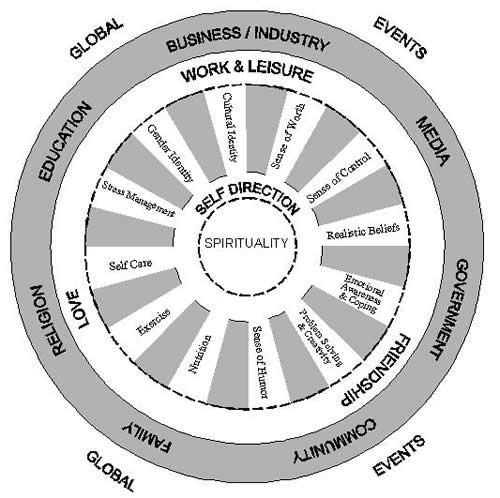
Remember that I'm using the Wheel of Wellness to help visualize health in life:


It's been almost a month since I've gone through an aspect of the Wheel of Wellness, so if you need a little refresher, click here. We are currently in the middle of Life Task 2: Self Direction, and today we will be moving on towards the subtask of Exercise.

Myers & Sweeney define the subtask of Exercise the following way:

Leading an active rather than sedentary lifestyle, exercising 20-30 minutes three times a week, stretching regularly.


Myers and Sweeney state the following in regards to exercise: "Regular physical activity, or exercise, is essential in the prevention of disease and enhancement of health and is important for healthy aging. The benefits of exercise for physical and psychological well-being have been clearly established. Exercise increases strength as well as self-confidence and self-esteem. In addition, there is a significant correlation between physical fitness and improved emotionality as well as cognitive functioning. Exercise training has been shown to significantly decrease state-trait anxiety scores, decrease mild depression, reduce stress, and beneficially affect a variety of chronic illnesses" (Counseling for wellness, p. 24).

Sounds like a pretty good deal, doesn't it? Our physical and mental health is so interwoven that changes in one will affect changes in the other. Our ability to manage our stress and avoid physical disease is greatly dependent on our physical health, yet so many people today have chosen to not view this as an important component of their health. Exercise is certainly a difficult and time consuming component of our daily health, but it is also incredibly important as well. It's very difficult to function well in life or have healthy relationships without our physical health. Of course one can also go out of balance the other direction as well, and get too consumed by this. Remember that health in each of these areas is about BALANCE. Remember that exercise isn't ALL OR NOTHING. While it's ideal to get 30 minutes, if you can only squeeze in 15 minutes in a day, it's better then doing nothing!

Now that I've set the ground work for physical health and exercise, the next few weeks will be spent discussing this subtask of health.

Now it's your turn:
What's one of the biggest benefits of exercise in your own life? What's your favorite website to help keep you motivated and on track with exercise in your life? 

Tuesday, November 1, 2011

OCD Awareness: {Resources}

Happy November! It's hard to believe how quickly this fall is flying by! Wasn't it just August a week ago?

Over the last 2 weeks, I've been doing a series on OCD, which I decided to do starting during OCD Awareness Week. I'm thinking that today will be my last post on this topic for awhile, although I'm sure it'll pop up on my blog from time to time!

While I've tried to provide some basic information, I wanted to leave you all with some resources for anxiety disorders, and specifically for OCD.

International OCD Foundation - This website has a lot of fantastic information, including information on different "types" of OCD, hoarding, and other related disorders.

Psychology Today's "Beyond the Doubt" Blog

Mayo Clinic: OCD - From Symptoms to Causes to Coping and Support, the Mayo Clinic provides concise information on the topic.

National Alliance of Mental Illness

Of course there is a lot of other good information out there, you just have to take some time to find the good stuff! I do also want to mention that sometimes life with OCD can feel hopeless and it may seem easier to end it all then suffer with it. If you are having suicidal thoughts, please tell someone you love and trust, call 911, or call the Suicide Prevention Line.

If you've missed the other posts in this series and want to catch up on any, here's the list:


Now it's your turn!
Did you learn anything surprising about OCD? What's one way you can support those in your life struggling with mental illness? 

Thursday, October 27, 2011

OCD Awareness: {Help! Someone I Love Has OCD part 2}

Yesterday I listed out 5 steps you can take to help support your loved one if they are struggling with OCD (or any mental disorder for that manner)! Click here if you missed that post. Today I will be discussing a few more:


  •  Learn to recognize and reduce "Family Accommodation Behaviors" (listed exactly from the OCD Foundation, pg 14)These are behaviors that people do to enable the OCD symptom, and are not healthy for you or your loved one. While it seems helpful in the moment (I'm taking away some stress), it doesn't help them to address the situation, and doesn't help it long term. 
    • Participating in the behavior: You participate in your family member's OCD behavior along with them
    • Assisting in avoiding: You help your family member avoid things that upset them (ex= doing their laundry for them so that it is cleaned the "right" way)
    • Helping with the behavior: You do things for your family member that lets them do OCD behaviors (ex= buying large amounts of cleaning products for them)
    • Making changes in family routine: (ex= you change the time of day that you shower, or when you change your clothes)
    • Taking on extra responsibilities: (ex= going out of your way to drive them places when they could otherwise drive themselves)
    • Making changes in leisure activities: (ex= your family members gets you to not leave the house without them. This affects your interests in movies, dinners out, time with friends, etc).
    • Making changes at your job: (ex= you cut back on hours at your job in order to take care of your family member. 
  • Don't Focus Solely on the Behavior. Remember that the OCD thoughts & behaviors are not all of who your loved one is. Focus on them as a whole, not just on the behavior. It's important that the individual knows you care about them as a whole person. 
  • Come Up with a game plan if your loved one refuses treatment: Your loved one may need more time before they are willing to seek treatment. You can help or harm in this situation. Don't nag or demand- they'll often strengthen their resolve to avoid treatment. Encourage them, be open to discussing it together, and get support for yourself! Patience and gentle encouragement can be helpful during this time. 
  • Remember that you cannot do the work of treating OCD: You cannot change your loved ones thoughts or behaviors yourself. You can help point out distorted thoughts, or remind them of things such as the "4 Rs", but they must choose to do the work. Don't blame yourself if they don't change- it's NOT your fault! 
  • Aid a listening ear: If your loved one is actively engaged in treatment, they may want to process sessions with you, or express how hard it is to sit in the anxiety (through ERP). Choose to listen and support, but don't dump answers and advice on them unless they want it. If you constantly dump advice, more then likely they will stop talking to you!
Well, there you have it! 10 steps you can take to remain healthy and support your loved on in the best and most healthy way possible!
If you've missed the other posts in this series, here they are!


Now it's your turn:
If you have a loved one struggling with a mental disorder, what do you do to keep yourself healthy?
If you are currently struggling with a mental illness, in what ways do you feel supported by your loved ones? 

Wednesday, October 26, 2011

OCD Awareness: {Help! Someone I Love Has OCD! part 1}

If a loved one has OCD, there are things that you can do to either hurt or help the situation. With a little knowledge, support, and research, you can be the healthiest individual you can be in helping support your loved one. Here are a few steps that you can take:


  1. Educate yourself and your family on OCD: OCD can be complicated and difficult to understand. On the surface, it doesn't make sense why an individual MUST do something to right something that has happened or something they thought about. When you educate yourself on the disorder, this begins to make a bit more sense. Reading books and finding websites, as well as talking to a doctor or therapist, will help you learn about the disorder. 
  2. Get support for yourself: From online and "in person" support groups, these can also be beneficial not only in educating yourself, but in processing your own thoughts and behaviors. 
  3. Engage in self-care behaviors: It can be draining at times in dealing with someone struggling with an illness or disorder. Taking care of yourself is essential to not only keep yourself healthy, but also to provide healthy support to those around you. Here are some ideas to help get you started
  4. Learn to identify cognitive distortions & start changing them! We each have cognitive distortions that sneak their way into our thinking patterns. Learn to change these in your own conversation, as well as helping those around you start changing. There are a number of cognitive distortions that are prevalent in OCD, and it's important that your loved one know these as well. Click here for information on Challenging & Changing Cognitive Distortions. 
  5. Learn to set healthy boundaries in your life: This will not only help you to engage in self-care, but it will also help you to maintain a healthy relationship with your loved one(s). Click here and scroll down to "boundaries" for a list of posts I've done on this topic. 
Part 2 of "Help! Someone I Love Has OCD!" will be coming tomorrow. Keep your eyes out! (I'd also like to mention that these steps listed above are helpful for ANY mental disorder, not just OCD).

Tuesday, October 25, 2011

OCD Awareness: {Medication}

OCD is best treated through a combination of therapy (such as ERP) and medication. Because OCD is a biological disorder, medication tends to do fairly well in helping to treat it.  Just a small sidenote: It's important to not just take medication, but to use it in conjunction with treatment for best results.

When an individual has OCD, there is a lack of serotonin, which is a neurotransmitter in the brain. Medications used in the treatment of OCD help increase levels of serotonin, and are called Selective Serotonin Re-uptake Inhibitors (SSRIs). In each of our brains, we have an area called the synapse between neurons in the brain. Neurotransmitters (the brain's chemicals) are sent from one neuron, through the synapse, to the next neuron. SSRIs serve to inhibit the re-uptake of serotonin from the synapse. Are you confused yet? Because of this chemical process which occurs in the brain, medication can be a helpful part of treatment.

There are certain drugs which have been found to be helpful for the treatment of OCD. The OCD Foundation lists the following medications (source, p. 10):

  • Fluvoxamine (Luvox)
  • Sertraline (Zoloft)
  • Citalopram (Celexa)
  • Escitalopram (Lexapro)
  • Fluoxetine (Prozac)
  • Paroxetine (Paxil)
  • Clomipramine (Anafranil)
  • Venlafaxine (Effexor)

It's important to remember since this medication is used to help correct a chemical problem, it takes a number of weeks for medication to reach its full capacity to work. While some people notice changes within a few weeks, it will probably take a couple of months for it to work completely. Please be patient!  People experience side effects in different ways. Learn the side effects! Remember that a side effect of the medication may be less intrusive on your life then the obsessions and compulsions, and the results of these things, on your life.

Here are other posts in this series:

Thursday, October 20, 2011

OCD Awareness: {The 4 R's}

In his book entitled The Obsessive-Compulsive Trap: Real Help For A Real Struggle, Dr. Mark Crawford outlines what he calls the 4 R's. I think it's a great little memory device in dealing with OCD, so I thought I would share. This is quoted exactly from his book (page 128).


  1. Recognize: This step uses cognitive therapy tools to enable the patient to identify the thinking that is behind the anxiety. In treating OCD, this inevitably results in identifying the obsessive thought, worry, or image and correctly defining it as an irrational obsessive thought.
  2. Resist: This step refers to the RP {Response Prevention} diagram. In this step, the patient is aware of the urge to perform a compulsive behavior. He has been educated regarding the importance of employing RP as essential in breaking the power of OCD and is prepared to resist the urge to perform the compulsive behavior. 
  3. Replace: In step 3, the patient begins the process of modifying the obsessive thought or worry with one that is based on truth.
  4. Re-direct: In the final step, the patient is taught to use the tools mentioned earlier to get through the critical interval of response prevention until the anxiety passes and the pattern of obsessive thoughts followed by compulsive behaviors is weakened. 
What I enjoy about the 4 R's that Dr. Crawford identifies is that it's easy in the moment for a parent to remind a child about their 4 Rs, or the individual can keep a "4 R's" post it note in their cubical at work as a very easy reminder of how to walk himself through the anxiety he experiences. 
In Step #1, Dr. Crawford mentions the need to identify thinking behind the anxiety. Sometimes, this includes one (or more) cognitive distortions. To read about cognitive distortions, click here and here. In Step #3, the individual changes the thought to one that is based on truth. For more information about challenging and changing cognitive distortions, click here

Here are the other posts in this series:

Tuesday, October 18, 2011

OCD Awareness: {ERP Therapy part 1}

Today I'm continuing my series on OCD. If you've missed the previous posts in this series, here they are:


Those who struggle with OCD are not without hope! There are treatments and therapy that have been proven to e effective. Of course with many types of disorders, Cognitive Behavioral Therapy is proven through numerous research studies to be the most effective. One type of CBT, called Exposure & Response Prevention (ERP), is especially effective. 

"Exposure refers to confronting the thoughts, images, objects and situations that make you anxious" (source, p.8). Of course this seems counter-intuitive, because in life, and especially with OCD, it's all about trying to decrease anxiety by doing something (compulsion) to deal with the obsession. Response Prevention means that "once you have come in contact with the things that make you anxious, you make a choice to not do the compulsive behavior" (source, p.8). Again, this doesn't seem to make sense. Why would someone make an active choice to sit in the anxiety without trying to do anything about it? On the surface level, if you try to ignore the thing that makes you anxious, the anxiety level will tend to sky rocket. Here's the neat thing that most of us don't realize, because we don't give this a chance to happen: if you can sit in the anxiety and not do the compulsive behavior, you will notice that eventually your anxiety level will drop. "The drop in your anxiety that happens when you stay 'exposed' and 'prevent' the compulsive 'response' is called habituation" (source, p.8).

For someone struggling with OCD, the idea of ERP can be absolutely terrifying. What might happen, or what might I become, if I can't do a compulsion to make the thought or situation right? The idea of sitting in anxiety and learning to deal with it is fairly horrifying to some, and can lead to panic at just the thought of this. 

Keep your eyes out for a follow up post on ERP! 

Thursday, October 13, 2011

OCD Awareness: {OCD Thinking}

“As we discussed in Chapter 1, the more you fight an obsession, the more frequent and intense it becomes.  This is called a paradoxical effect, something we all experience at times.  For instance, if someone commands you, ‘Do not think of a red elephant,’ you will automatically respond by thinking about a red elephant.”
Edna B. Foa, Ph.D., Stop Obsessing!

OCD is an anxiety disorder in which thoughts go around and around in the brain (obsessions) until an individual does something to "make it better" (compulsions). When an individual has OCD, the "warning system" in the individual's brain is not accurate. "Anxiety is your brain's warning system. When you feel anxious it feels like you are in danger. Anxiety is an emotion that tells you to respond, react, protect yourself, DO SOMETHING...Feelings don't lie... Unfortunately, if you have OCD, they do lie. If you have OCD, the warning system in your brain is not working correctly. Your brain is telling you that you are in danger when you are not" (source, p.2). 

Because the brain tells the individual that something isn't correct, the individual must then do something to make that anxiety go away. This is why an individual engages in compulsive behaviors. It would be easier if the individual could tell themselves that it's not true, or not to think about the obsession. However, have you ever tried to not think of a red elephant. The more you try to tell yourself not to think of the red elephant, the more you will think about it. Therefore, simply telling the individual to not think about it does not work. This is why the individual needs to learn to handle the anxiety in the situation. 

Check out the other posts in this series:


Wednesday, October 12, 2011

OCD Awareness: {Obsessions & Compulsions}

Welcome back to another post as part of OCD Awareness Week. If you haven't read the previous posts, check them out:

OCD Awareness: {Introduction}
OCD Awareness: {Statistics & Barriers to Treatment}

Today I thought I would go into categories for obsessions & compulsions. Sometimes it's easy just to think of the "clean issue" with OCD, but there's much more involved in this as well. It's when we know and understand that we can begin to support. The information that follows is from this source.

Obsessions

  • Contamination (body fluids, germs, or other contaminants)
  • Losing Control (fear of acting impulsively to harm self or others, yelling, stealing, etc)
  • Perfectionism (fear of losing information or things, exactness)
  • Harm (fear of harming others or being responsible for something happening)
  • Unwanted sexual thoughts (forbidden sexual thoughts or images, obsessions of homosexuality)
  • Religious Obsessions (concern of offending God, excessive concern of morality)
  • Other Obsessions (concern with getting illness or superstitious ideas)
Compulsions
  • Washing & Cleaning (Excessive washing/cleaning in the right way or for far too long)
  • Checking (making sure you didn't hurt self/others, making sure you didn't make a mistake)
  • Repeating (re-reading/writing, routine activities (walking in/out of door), repeating in multiples)
  • Mental Compulsions (Reviewing events, praying to prevent harm, "canceling out" thoughts)
  • Other Compulsions (collecting items (hoarding), putting things in order, asking to get reassurance)
Of course under each of these categories the way the individual lives them out is different. An individual may struggle primarily with only one type of obsessions, or may struggle with pieces of many types of obsessions or compulsions. Each individual is different and unique in their own struggle and expression of these aspects. I would like to mention one thing in regards to the obsessions list. Most of these may seem familiar to you. I think the ones from this list that people don't hear about as much is the "harm" and "unwanted sexual thoughts" categories. I want to stress that just because an individual struggles with obsessive thinking in these areas DOES NOT MEAN they will act on them. In fact, people who struggle with these types of thinking don't act on them. For more information on these Violent & Sexual obsessions, click here

Tuesday, October 11, 2011

OCD Awareness: {Statistics & Barriers to Treatment}

In yesterday's post, I introduced OCD and gave definitions of obsessions and compulsions. Today I would like to further explore what exactly OCD is and potential barriers to treatment. 


Surprisingly, many more people struggle with OCD then the average person might guess. According to the International OCD Foundation, "Our best estimates are that about 1 in 100 adults – or between 2 to 3 
million adults in the United States – currently have OCD. This is roughly the same number of people living in the city of Houston, Texas. There are also at least 1 in 200 – or 500,000 – kids and teens that have 
OCD. This is about the same number of kids who have diabetes." Were you aware that this disorder was as prevalent? Perhaps we aren't even aware of those in our life who do struggle. People with OCD can continue to be quite functional, and aren't always as severe as movies sometimes portray. Might there be people in your life who are currently struggling, and you are unaware? For a disorder this prevalent, why are we not discussing it more? Why are we not educating ourselves on the signs & symptoms, and developing ways that we can support those who struggle? 

There are many barriers to treatment which make it difficult for the individual to get the help that they need. Unfortunately, there is generally a huge gap between the first symptoms of the disorder and when the individual finally gets help. Here are a few of the barriers:
  • Education: As a young person first experiencing the signs of OCD, I may not even be aware of the fact that what I'm experiencing is actually a disorder. I may believe I'm just "weird" or "going crazy". As parents, educators, doctors, mental health professionals, or others who are regularly around children, teens, and young adults, we MUST be able to identify the signs & symptoms as well. 
  • Shame of the Individual: Especially with obsessions having to do with unwanted sexual thoughts or harm to those around, it might be humiliating for others to know what you are REALLY thinking. Fear of being labeled or made fun of, as well as a fear that you are "too crazy to be helped" can lead to a lack of getting help. 
  • Lack of Support From Family: Obviously there are some people who are terrified to be "labeled" or refuse to admit that their child may have a problem. A parent's lack of support in getting their child the help that they NEED can be a huge barrier to treatment as well. 
  • Affordable or Convenient Treatment: Sometimes life just seems too busy to take time to go to a counselor, or we don't have the money to afford a counselor. 
If you are one of the "1 in 100" with OCD, please know that YOU ARE NOT ALONE! There is a community of those struggling with this disorder, and a host of counselors ready and eager to help you on your journey! Unfortunately, OCD doesn't just "go away" when we ignore it, so the best thing to do is get the help that you need quickly and as soon as you see symptoms develop! 

Here's what you can do:
If you struggle with OCD, what's a barrier to getting the help you need?
If you don't have OCD, what sort of stigmatizing behavior might you engage in towards those struggling? What can you do to continue to increase your knowledge on this disorder? 

Monday, October 10, 2011

OCD Awareness: {Introduction}

Happy Monday! I will be forgoing my usual "Thankfulness Project Monday" post for a post dedicated to an awareness week. Today begins OCD Awareness Week! As many people only know what is presented in the media, I thought I would spend a few posts this week addressing the issue and helping each of us to increase our education on this disorder.
With that, please join me on a journey to understand a little better the "disease of doubt"- Obsessive Compulsive Disorder.

When an individual has OCD, there is a struggle with both obsessions & compulsions. The National Alliance of Mental Illness states it the following way:
"Obsessions are intrusive, irrational thoughts -- unwanted ideas or impulses that repeatedly well up in a person's mind. Again and again, the person experiences disturbing thoughts, such as "My hands must be contaminated; I must wash them"; "I may have left the gas stove on"; "I am going to injure my child." On one level, the sufferer knows these obsessive thoughts are irrational. But on another level, he or she fears these thoughts might be true. Trying to avoid such thoughts creates great anxiety.
Compulsions are repetitive rituals such as handwashing, counting, checking, hoarding, or arranging. An individual repeats these actions, perhaps feeling momentary relief, but without feeling satisfaction or a sense of completion. People with OCD feel they must perform these compulsive rituals or something bad will happen." (source)

If you're anything like me, you might see a few characteristics of yourself in the above description. We each have worries and quirks in life. If you see yourself a bit in the description above- DON'T PANIC! It's normal for each of us to obsess about some things in life, or to have rituals, such as a bedtime ritual. People with OCD struggle with these thoughts for many hours throughout the day, and life is changed because of it. 

A few things to look forward to in this series:
  • Statistics in population
  • Common obsessions and compulsions
  • Exposure and Response Prevention
  • "how to help a friend" (supporting someone in your life who is struggling with OCD)
What you can do:
  • Educate yourself on the disorder, and learn how to support those struggling
  • If you are struggling with the disorder, choose to take a step forward to educate yourself and/or seek help and support!
What I'd like to know:
What questions do you have about OCD? What would you like to know or see in a series devoted to OCD? 


Thursday, September 1, 2011

Advice For College Students

The purpose of primary education is the development of your weak characteristics; the purpose of university education, the development of your strong.  ~Nevin Fenneman

An investment in knowledge always pays the best interest.  ~Author unknown, commonly attributed to Benjamin Franklin

Whether you think you can or think you can't - you are right.  ~Henry Ford

As fall is ushered in every year, hundreds of thousands of students pack up and move back into colleges across the world. Without an intentional focus on what you're doing and what you want out of college, it's easy to waste it. That being said, I thought I'd ask some of my blog readers and twitter followers what advice they would give themselves as a college freshman. Here's what a few of them said:
And here are a few others I have based off my own life and my years working at a college:

  • Create a mission statement for college and post it on your desk. There are days you'll wonder if it's worth all the work, pain, and sacrifice, and it'll be helpful to have something concrete to go back to.
  • Create a balance between work and play: Sometimes it's easy to get caught up on all the parties and events that colleges have to party. Don't seclude yourself, but you also don't have to attend everything out there. Remember that you are at college to get an education, and you're paying a lot for it. Don't waste it.
  • Learn to say "no": There are so many good opportunities at college: clubs, volunteer work, jobs, friendships, and classes. You can't do it all, and if you don't learn to say no, you'll end up being stressed and burned out. Choose a handful of things that are important, and say no to the rest. 
  • Don't Skip Class: It's REALLY tempting to skip class in order to sleep, go to a party, or watch TV. Don't do it. Professors tend to have a lot more grace with you if you have an emergency or need an extension if they see that you're putting forth an effort to show up. 
  • Study Abroad! If you have a chance, travel as much as you can! You learn a lot about yourself and the world by doing it!
  • Get to Know Yourself: College is the time where you step away from your parents and have control of the choices you make in life! Get to know who you are, and feel confident in that! Develop self worth. Learn what your strengths are and then develop them! Learn how to cope with your weaknesses.
  • Increase Health And Wellness: There are a huge amount of jokes out there about the lack of health in college. Remember that every day you have the choice about what healthy decisions you make! Try adding different wellness behaviors to your life!
  • Develop Coping Strategies for stress and anxiety: Those stressful moments will come up. If you healthy coping skills in place for those moments so that they don't suck you under. 

Obviously there's a number of other things I could say about starting college, but long lists get overwhelming:) 

Now it's your turn:
What was the most important lesson you learned in college? What's your best piece of advice?

Monday, April 18, 2011

Thankfulness Project Monday

I'm starting to get into the habit over the weekend of coming up with things that I'm thankful for in preparation for this post. Doing so has started to create a daily habit, which is the whole goal of the thankfulness project! So, without anymore comments, here are some of the things I'm thankful for today:


  • A very "checked off" to do list: Ok, so I wrote "productivity" on my list last week, so I changed the wording up a bit. But, I feel like it's fine to say this two weeks in a row. I had a fairly unplanned weekend, which was exactly what I needed! I had a long list of "to-dos" that I needed to accomplish around the house, and I got almost all of them done! I always feel more settled going into the week when I have things accomplished. 
  • Health: Allergen levels have picked up this week, and I've started to feel a little less then my best. And every time I'm tempted to complain, and remind myself how blessed I am to be only dealing with allergies. It could be much worse. 
  • "My Little Lifesaver": This sort of goes along with the above point. I've been fairly susceptible to allergens for many years, and this reaches the boiling point back in 2007. I'd experienced almost half a decade of 8-9 months a year of sinus infections, even going onto steroids to try to knock them out. The ENT said it was either this or I'd need surgery, and for the last 4 years, I haven't even had a sinus infection. It's amazing! Every morning I wake up with a sinus headache, and this is the first thing I use. Voila. No more headache!
  • My Space Heater: I think it's a little funny that "sun and heat" was on my list last week, and a space heater is on this week. It's been cold and rainy, and I don't want to turn on the heat for my whole house in April. The space heater is a much cheaper way to give a little heat to my house! And let's face it...it feels great to come in from the pouring rain and sit down in front of it!
  • Support in Education: While I'm not in school, I am still required to continue learning and educating myself in the field of counseling, and in the issues that my clients face. We are to keep up with the current research in the field, and add various new techniques to our practice. I'm so thankful for what I learn from my other colleagues and friends in the field, and for the resources that are passed along to me! 
There you have it! Just a few of the many things that I'm thankful for at the moment. 

What was the highlight of your weekend? What are you thankful for today? 

Thursday, December 9, 2010

Boundaries & Burnout Pt 2

So this is part two of my discussion on boundaries & burnout. To summarize. Having healthy boundaries means that we are responsible for our own thoughts, feelings, and behaviors. Others aren't responsible for us, and we aren't responsible for those of others around us. When we don't have healthy boundaries, that can lead to stress or burnout (see yesterday's post on signs & symptoms of burnout).

Increasing your health & wellness, refining your self-care techniques, and creating coping skills for stress or anger are crucial for protecting yourself against burnout (along with strengthening your personal boundaries).
So here are some suggestions for prevention:
1. Do a Wellness Analysis on Yourself: Evaluate each area of wellness in your life. What are your strengths for that area? What are areas of improvement? What is something you can do to increase wellness in that area?
2. Develop Mindfulness About What Your Body Is Telling You: When we get so busy or anxious, it's easy to not pay attention to our bodies. Take time to evaluate how you're really feeling. Are you constantly tired? Frustrated? Angry? Take time to figure out what's causing this, and then deal with that!
3. Learn to Set Healthy Boundaries: Remember what is You (thoughts, feelings, and actions), and what is others-basically, know what things fall under your responsibility, and what falls under the responsibility of others. Learn to say NO so you don't overextend yourself!
4. Develop Your Coping Skills: Whether it's deep breathing (see post on Nov 8, 2010 for details!), yoga, Pilates, another form of exercise, positive self-talk, or another coping skill, develop and USE them on a daily basis to keep yourself healthy!
5. Strengthen Your Social Support Network: Make sure you aren't just pouring into others. You need to have two way relationships where people can also pour into you! Spend time and be open with your friends:)
6. Create a Mission Statement For Your Life: Your mission statement can remind you of your goals and dreams. When things seem overwhelming or out of control, go back to this. What about starting each morning by reading your mission statement?
7. Educate Yourself! Know the signs & symptoms of burnout, and check yourself often!

Of course I could list more, but I think this is a good start:) Remember-health is an ACTIVE choice! It doesn't happen naturally. I know that sometimes the effort doesn't seem like it in the moment, but long-term it makes life SO much easier!