Showing posts with label Work. Show all posts

Friday, March 23, 2012

Great & Noble Tasks

It's the end of Quote Week:( I enjoy passing along quotes, and hope that something from this week has stuck out to you, and you've found a quote that is helpful to you. Here's the last quote for this week:

"I long to accomplish a great and noble task, but it is my chief duty to accomplish small tasks as if they were great and noble."
-Helen Keller 

Helen Keller has a number of fantastic quotes that I enjoy. This one in particular stood out to me, because I know that most people at some point in life (including myself) has felt frustrated that I'm not doing anything that I feel is big or noble. I feel like I'm doing very normal, small tasks that won't make a difference in the grand scheme of things. We cook meals, do laundry, mow the lawn, check off to do lists at work, or drive our kids around. We accomplish many little tasks that we don't enjoy doing, or feel that the tasks we do waste our time. It's easy to feel beaten down and frustrated when we feel trapped in the small tasks.

I like how Helen Keller looks at those little tasks. I'm wondering how our lives would e different if we viewed the little things we had to do in life as if they were great and noble? How would we start to do engage in those tasks? Would we feel more joyful and content in life? It's an interesting thought...

Wednesday, March 14, 2012

Wellness Wednesday: {Boundaries at Work- Part 1}

Welcome back to Wellness Wednesday! If you're interested in other posts in this series, check out my Wellness page here. Right now I'm discussing Life Task 3 from the Wheel of Wellness, which is work and leisure. Past posts on the "work" component of wellness include:

Today I'm going to expand a bit more on the idea of work overload, and what to do if you find yourself working too much overtime, to the point of exhaustion (or the other signs & symptoms I posted above). 

Cloud & Townsend, in their book Boundaries, have a few thoughts on work overload. They state the following: "If you are in a situation in which you're doing lots of extra work because you "need the job" and because you are afraid of being let go, you have a problem. If you are working more overtime than you want to, you are in bondage to your job. You are a slave, not am employee under contract" (Boundaries, p. 198). 

Employers can take advantage very easily of people who choose to not say "NO" when asked about increasing job opportunities. If they know someone won't say no when they ask someone to stay late, don't you think that the employer is going to take advantage of that? If you are constantly working overtime, what do you think that does to your health (physical, mental, emotional, spiritual) and your relationships? It's not so great. 

Here are some tips they offer for dealing with this issue (quoted directly from book, p. 198):
1. Set boundaries on your work. Decide how much overtime you are willing to do. Some overtime during seasonal crunches may be expected of you. 
2. Review your job description, if one exists. 
3. Make a list of the tasks you need to complete in the next month. Make a copy of the list and assign your own priority to each item. Indicate on this copy any tasks that are not part of your job description. 
4. Make an appointment to see your boss to discuss your job overload. Together you should review the list of tasks you need to completely in the next month. Have your boss prioritize the tasks... You may also wish to review your job description with your boss at this time if you think you are doing things that fall outside your domain. 

A few of my own thoughts- I like the list above, and think many people would benefit from following these steps. ALWAYS get a job description. This will give you ground to stand on and help you determine what is and is not reasonable for your job responsibilities. If you don't have a description, how will you know what your expectations are? 

Now it's your turn!
Are there some boundaries you need to set in the workplace when it comes to working overtime or doing too many things that fall outside your job description? How do you try to maintain health while you're at work?

Wednesday, March 7, 2012

Wellness Wednesday: {Work Overload- Signs & Symptoms}

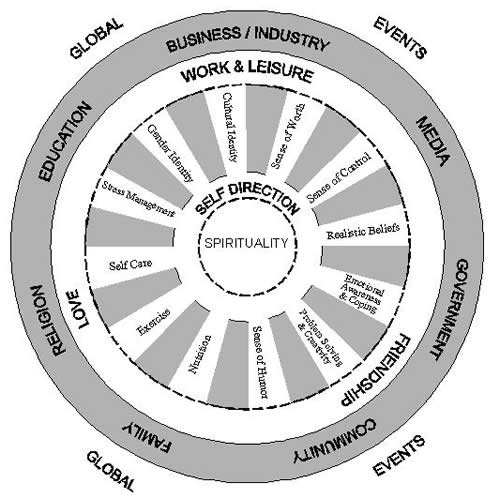
Welcome back to Wellness Wednesday, a fun mid-week look at the areas of wellness in our lives. To remind you, in talking about wellness I'm discussing the positive factors in life that help protect us from the events of life. Wellness is therefore not about the absence of the negative, but the presence of the positive. Remember that I am using the Wheel of Wellness to show the various factors of wellness in our lives.

After introducing the ideas behind work & leisure and looking at an overview of the work factor, today we'll be looking in more detail at the factor of "work" in our lives.

To remind you, here's the definition of the "work" factor of wellness:


Activity that contributes to the well-being of self and others: perception of adequacy of financial resources (financial freedom), job satisfaction, feeling that one’s skills are used, perception of work overload, role conflict, role ambiguity (i.e., psychological job security), participation in decision making (i.e., feeling appreciated), satisfaction with relationships in the job setting


Today I want to look specifically at the phrase "perception of work overload". This is an important issue in our society today, as more and more individuals are being overloaded by work. Here are a few signs and symptoms that you might be headed towards work overload:

  • working increasing hours that are unrealistic or are eating up your time with your family in the evenings
  • unrealistic expectations beyond your job description
  • pressure into working unpaid hours
  • eliminating healthy behaviors from your life in order to work more hours
  • consistently higher and higher levels of stress & frustration
  • Anger
  • Fatigue
  • Dreading going to work
  • Family complaining that you aren't present often, or aren't emotionally present when you're physically present
  • Depression
  • Stomach Pain
  • Migraines
This is obviously a list of only some of the signs and symptoms of work overload, which puts a strain on your body, and will very quickly start decreasing your levels of health and wellness. 

Now it's your turn!
Do you think that you (or someone close to you) have every hit work overload? How does an overload at work influence the other factors of wellness?

Wednesday, February 29, 2012

Wellness Wednesday: {Overview of Work}

First I'd like to say- Happy Leap Year Day! :) I hope you enjoy it since it only comes around once every 4 years.


Welcome back to Wellness Wednesday, a fun mid-week look at the areas of wellness in our lives. To remind you, in talking about wellness I'm discussing the positive factors in life that help protect us from the events of life. Wellness is therefore not about the absence of the negative, but the presence of the positive. Remember that I am using the Wheel of Wellness to show the various factors of wellness in our lives.


After introducing the ideas behind work & leisure last week, today we'll be looking in more detail at the factor of "work" in our lives.

Myers & Sweeney define "work" the following way:

Activity that contributes to the well-being of self and others: perception of adequacy of financial resources (financial freedom), job satisfaction, feeling that one’s skills are used, perception of work overload, role conflict, role ambiguity (i.e., psychological job security), participation in decision making (i.e., feeling appreciated), satisfaction with relationships in the job setting


The continue by saying "People who view their career as a calling tend to experience the highest work satisfaction. Feelings of competence in work tasks also have a positive effect on life satisfaction, and work experiences and work outcomes are consistently and positively related to self-reported emotional well-being" (Myers & Sweeney, 2005, p. 26)*.

Given that we spend a large percentage of our waking hours at work, our jobs can deeply impact our overall health and wellness. Obviously if you are in a place where you are being attacked, intimidated, or simply not supported, this will start to wear on your health. If you aren't in a safe work environment (emotionally, verbally, mentally, physically), this will start to bring down your overall health and wellness, and it is perhaps not the best place for you to be at. Do you have skills that you feel might be used better at your job? Talk to your boss about it! Use your skills in the best way you can, and your work will be more enjoyable and efficient.

Can you develop healthy, supportive, and fun relationships at your job? Sometimes it's hard to enjoy work when others around you are negative, do you have healthy coping skills to deal with it? It's frustrating to feel like we'll be nagged or attacked when we walk into work, but we cannot change those people. All we can do is deal with ourselves, and we still have the power to keep ourselves healthy.

A few questions to get you thinking:

  1. Do you feel like your skills and abilities are being used at the job you are at?
  2. Do you feel supported by your co-workers or boss?
  3. How can you develop healthy coping skills to deal with negative people at your workplace?
  4. Do you have a sense of control over at least some areas of your work?
  5. Is your job well defined? 
  6. If you job isn't well defined, is there a way that you can get a more clear and detailed description of your job, role, and responsibilities?
  7. Are you respected in the workplace?
Now it's your turn!
What skills do you feel are most used in your workplace? What's your favorite thing about your job? What is one healthy way that you deal with the stress of your job? 


*From: Myers & Sweeney (2005). Counseling for Wellness: Theory, Research, and Practice

Wednesday, February 22, 2012

Wellness Wednesday: {Life Task 3: Work & Leisure}

Welcome back to Wellness Wednesday, a mid-week look at various factors of wellness in our lives. Wellness isn't so much about the absence of the negative or illness in our lives, but the presence of positive factors that lead to health in our lives. This takes intentional work and focus, but leads us to a place of being a healthy and flourishing individual. Remember that I am using the Wheel of Wellness to discuss wellness:


I've already discussed Life Task 1 (Spirituality) and Life Task 2 (Self-Direction), and today I'll be moving on to Life Task 3 (Work & Leisure). Today's post will be an introduction, and I will break it down and discuss in more detail in future posts.

Myers & Sweeney define this life task the following way:

Activities and tasks essential to personal well-being and social living, including: work & leisure


How's that for a short and sweet definition? Let's look a bit further at what they meant.

"Work & leisure provide opportunities for pleasurable experiences that are intrinsically satisfying and provide a sense of accomplishment. They challenge or engage our senses, skills, and interests, frequently absorbing us in activities in a state of consciousness called flow (Csikszentmihalyi, 2000). This is an optimal state in which an individual loses awareness of self and time while being highly engaged in the task at hand. Excitement and joy are enhanced while anxiety and boredom are minimized" (Myers & Sweeney, 2005, p. 25-26).

Have you ever experienced "flow" in your work? Have you experienced those moments where you lose track of time and are deeply engaged in what you are doing? This could be either at work (place of employment) or in your hobbies and free time.
A few questions to start asking yourself as we prepare for a deeper discussion on work & leisure:

  1. Is work intrinsically satisfying to you?
  2. Does your work or hobbies you are engaged in provide a sense of accomplishment in your life?
  3. Is there an activity or dream you would like to pursue that you feel would provide a sense of accomplishment, use your skills, or absorb you in that activity?
  4. What keeps you from pursuing those dreams in your work or leisure time? 
  5. How might you be a more healthy individual if work was intrinsically satisfying?
  6. How might you increase those times of "flow" in your life?
Now it's your turn:
What're some of your favorite hobbies? What activities do you get the highest sense of accomplishment from in life? Is there something you would like to pursue but haven't allowed yourself to at this point? What is it?